%20(1).avif)


The dental implant market is one of the largest, fastest-growing, and most fiercely competitive segments of dentistry. The global dental implants market is projected to expand from approximately $5.75 billion in 2026 to over $8.37 billion by 2031, growing at a 7.8% compound annual growth rate [1]. In the United States alone, more than 120 million Americans are missing at least one tooth and over 36 million are missing all of their teeth, according to the American College of Prosthodontists [2]. The American Academy of Implant Dentistry estimates roughly 2.5 million implants are placed annually, with about 500,000 new implant patients added each year [3].
That demand has created an opportunity, and a problem. Most practices that offer implants compete in a crowded local SERP, run Google Ads campaigns that send traffic to a generic "Dental Implants" service page, and have no way to tie marketing spend back to actual case revenue. They spend $5,000 to $10,000 a month on paid media and wonder why their consultation calendar still has gaps.
This playbook is the system we use at Lasso MD to help practices fix that. It covers the full implant funnel: how patients actually search for implants in 2026, how to build a landing page that converts, how to win local SEO and Google Ads, how to make financing visible, and how to close the loop on ROI. By the end, you should have a clear plan for what to change in your own marketing, in priority order.
Why Implant Marketing Is Different from Hygiene Marketing
The biggest mistake we see in implant marketing is treating it like new-patient hygiene marketing. It is not. Implant patients behave differently across every stage of the funnel.
A hygiene patient sees a "$99 New Patient Special," calls within 24 hours, and books a cleaning. An implant patient often spends two to eight weeks researching before they pick up the phone. They read reviews, watch YouTube videos, compare pricing, ask Reddit, and quietly evaluate four or five providers in your local market. By the time they call, they have already made about 60% of the decision.
Three questions dominate every implant consultation:
- Am I a candidate?
- Will it hurt?
- How much will it actually cost me?
Your entire marketing system should answer those three questions before the patient ever picks up the phone. If your service page hides pricing, glosses over candidacy, and avoids the pain question, you are forcing every patient to do that discovery on the call itself, which is exactly when most of them never call at all.
Define Your Ideal Implant Patient (Beyond Demographics)
Before you build a single landing page or run a single ad, define who you are actually trying to attract. Demographics alone (age 50+, income above $75K, missing teeth) are too broad to drive useful targeting decisions. You need psychographic and clinical segmentation.
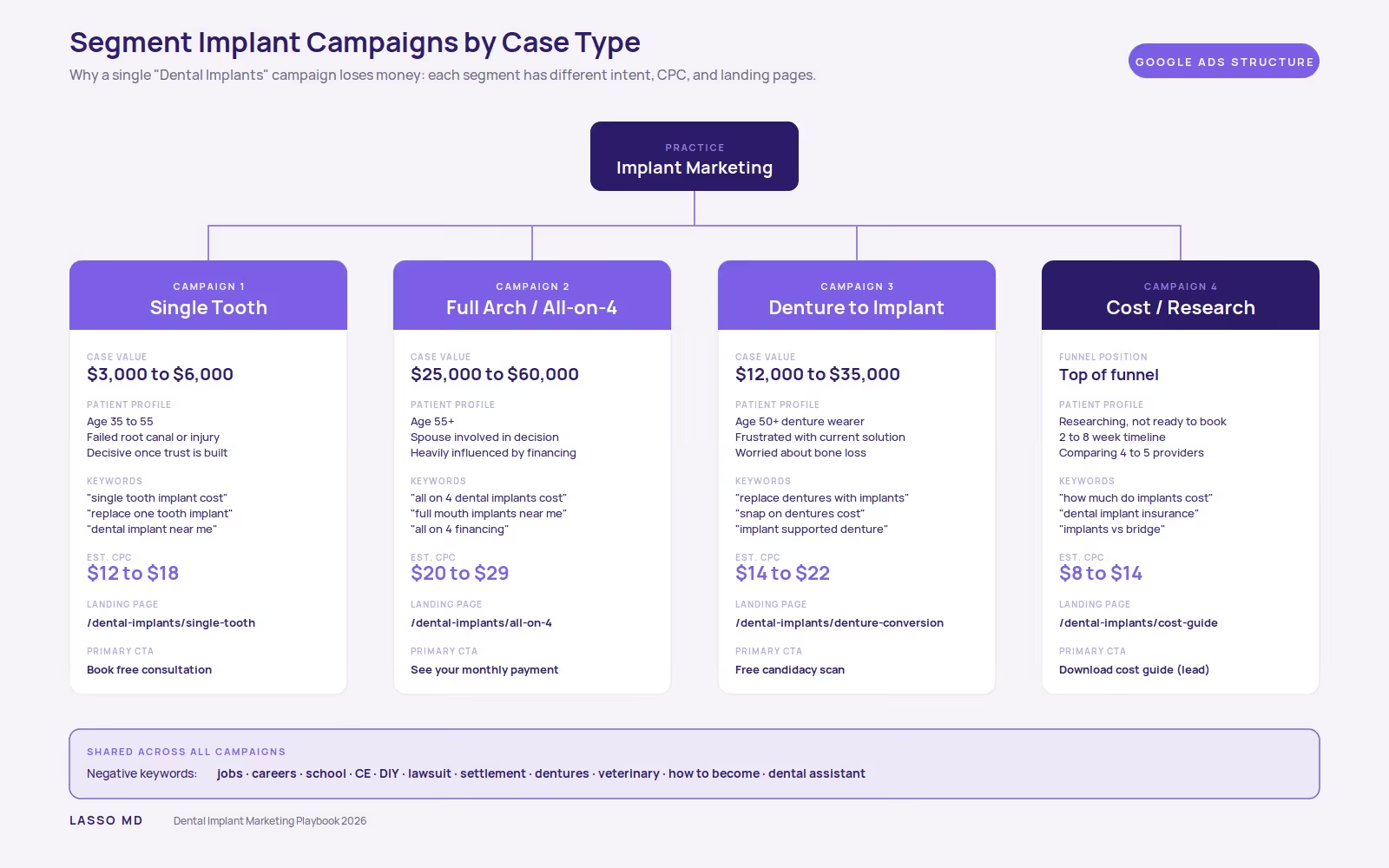
- Single-tooth replacement patients. Often younger (35 to 55). The trigger is usually a failed root canal, sports injury, or congenitally missing tooth. They are price-sensitive but decisive when they trust the provider.
- Multi-tooth or bridge-alternative patients. Typically 50 to 70, often considering implants because their existing bridge has failed or they want to avoid losing more teeth. They want clinical credibility and longevity data.
- Full-arch (All-on-4 or All-on-X) patients. Generally 55+, often denture wearers ready for a permanent solution. They make decisions with a spouse or adult child involved, and they are heavily influenced by financing.
- Denture-to-implant converters. A high-intent segment that is often invisible to general implant marketing. Their core questions are "do I have enough bone?" and "can I afford this?"
Each of these segments responds to different ad creative, different landing page hero messaging, and different Google Ads keyword sets. A campaign that mixes "single dental implant cost" and "all on 4 dental implants near me" into the same ad group will underperform both. Segment from day one.
Build an Implant-Specific Landing Page (Not a Generic Service Page)
This is the single highest-leverage change most practices can make. The "Dental Implants" page on a typical dental website is a passive, brochure-style description of the procedure. It rarely converts because it tries to serve patients in every stage of awareness simultaneously.
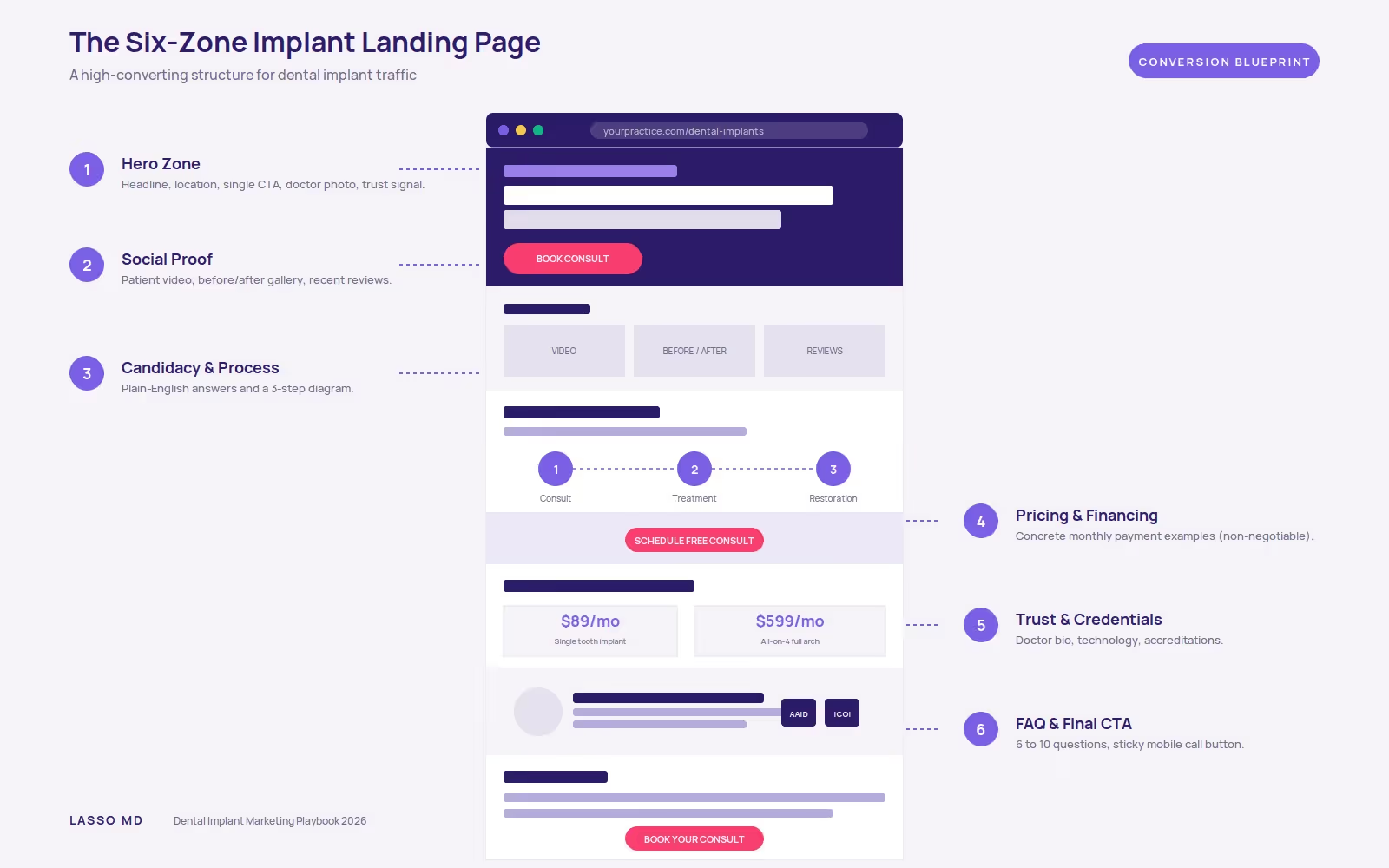
A high-converting implant landing page has six distinct zones, in order:
- Hero zone (above the fold). A clear headline that names the service, the location, and the outcome. Example: "Replace Missing Teeth with Dental Implants in [City], [State]." A single primary CTA (book a free consultation), a trust signal (years in practice, implant case count, accreditations), and a real photo of the doctor or office.
- Social proof zone. A patient testimonial video or before-and-after gallery within the first scroll. Implant patients evaluate emotionally before they evaluate clinically.
- Candidacy and process zone. Plain-English answers to "Am I a candidate?" with a 3-step process diagram (consultation, treatment, restoration). This pre-qualifies leads and reduces no-shows.
- Pricing and financing zone. Specific monthly payment examples (more on this below). This is non-negotiable.
- Trust and credentials zone. Doctor bio, technology used (CBCT scanner, guided surgery, in-house lab), and credentials.
- FAQ and final CTA. Six to ten questions covering pain, healing time, longevity, candidacy with bone loss, insurance, and warranty.
A mid-page CTA between zones 3 and 4 captures patients who are convinced before they reach the bottom. The page should load in under 2.5 seconds on mobile and have a sticky call button on smaller screens.
For the foundational website strategy that supports landing pages like this, see Lasso MD's guide to Transforming Your Practice with Cutting-Edge Branding and Website Design.
Local SEO and Google Business Profile Tactics for Implant Searches
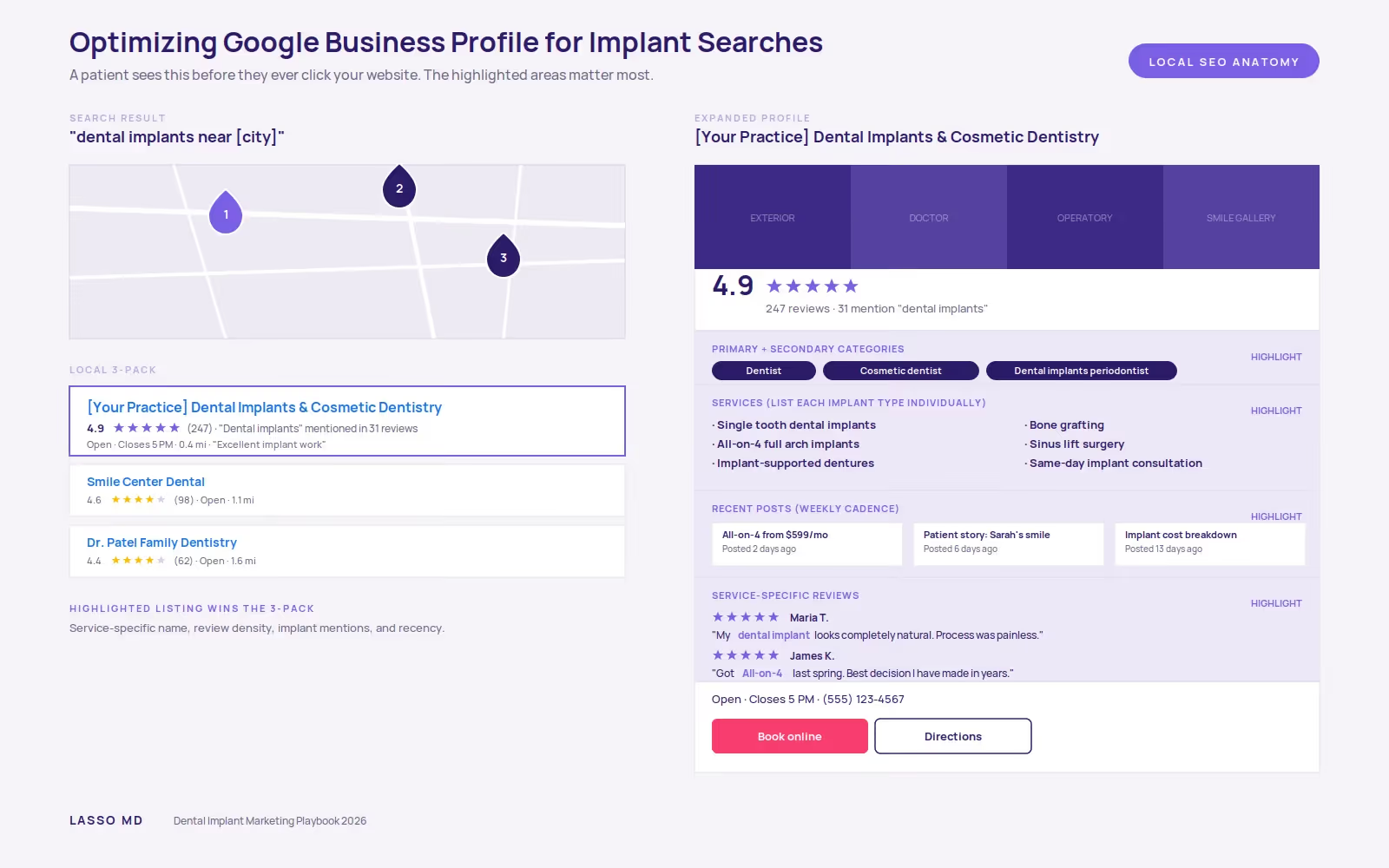
Google's local pack captures the lion's share of implant clicks. Listings in the local 3-pack receive 93% more calls and 126% more direction requests compared to listings outside it [4]. If your practice is not in the top three for "dental implants [your city]," you are losing roughly half of all local search clicks before any other tactic matters.
Specific tactics that move the needle for implant queries:
- Add dental implants explicitly to your GBP services section. Most practices select "Dentist" as their primary category and stop. Add "Dental implants periodontist" or "Cosmetic dentist" as secondary categories where appropriate, and list "Dental implants," "All-on-4 implants," and "Single tooth implants" as individual services with descriptions.
- Generate Google reviews that mention "dental implants" by name. Service-specific keywords inside reviews are a strong relevance signal for Google's local algorithm. After you complete an implant case, send a follow-up text that prompts the patient to mention the procedure: "If you have a moment, we would love a Google review. Sharing what type of treatment you had (like a dental implant) helps other patients find us."
- Publish Google Business Profile posts targeting implants. Post weekly. Topics that work: cost transparency posts, before-and-after cases (with patient permission), team spotlights, and short educational videos.
- Build a city plus service combination page. "Dental Implants in [City]" can be a separate URL from your main implants page when there is genuine local search demand. Do not duplicate content across multiple "Dental Implants in [Suburb]" pages with the same template; Google flags those as doorway pages.
For deeper coverage of the AI search layer, including how AI Overviews and ChatGPT now influence implant patient discovery, see Lasso MD's Mastering AI Search Visibility for Dentists and AI, GEO, AEO, and LLMO: How Lasso MD Is Future-Proofing Dental SEO in 2026.
Google Ads for Dental Implants: Budgets, Bidding, and Costly Mistakes
Implant keywords are among the most expensive in dental advertising. Industry benchmarks for 2026 put implant-related cost-per-click in the $12 to $25 range in competitive markets, up from $8 to $20 in 2024 [5]. Some specific implant terms exceed $29 per click in major metros [6], and dental implant CPCs have continued to rise as patient demand grows [10].
That sounds steep until you do the math. If your average single-tooth implant case is worth $4,000 in revenue and your full-arch case is worth $40,000, even a $300 cost per booked consultation produces strong returns. Three principles separate profitable implant Google Ads campaigns from money pits.
Segment campaigns by case type, never by general dentistry
Build separate campaigns (or at minimum separate ad groups with distinct landing pages) for: single tooth implants, full arch / all-on-4, denture-to-implant, and "dental implants cost" research queries. Each segment has a different intent profile and a different optimal landing page.
Build an aggressive negative keyword list
Implant searches attract a lot of irrelevant traffic. Common negatives every implant campaign needs:
- jobs, careers, hiring, salary
- school, training, course, CE, ce credit
- DIY, at home, kit
- lawsuit, settlement, class action
- dentures, partial (unless your campaign explicitly targets these)
- veterinary, dog, cat
- how to become, dental assistant, hygienist
Use value-based bidding once you have conversion data
Google Ads value-based bidding strategies (Maximize Conversion Value, Target ROAS) outperform manual CPC for implant campaigns once you have at least 30 conversions in 30 days. The catch: the algorithm is only as good as the conversion data you feed it. If you tell Google "every form fill is a conversion," it will optimize for cheap leads, not implant-quality leads. Send back qualified-lead and revenue data using offline conversion imports.
For a broader view of paid campaigns that work for dental practices, see Top 5 Highest-Performing PPC Campaigns for Dentists.
Educational Content and Video as Trust Builders
Because implant patients research for weeks before they buy, content marketing has an unusually high return for this service line. The goal is not to rank for every long-tail implant query (although that helps); the goal is to be the resource a patient finds in week one of their research and still trusts in week six when they finally call.
Content topics that consistently drive consultations:
- Cost breakdowns by case type. "How much does a single tooth implant cost in [State]?" and "What does All-on-4 actually cost in 2026?" win because most practice websites refuse to discuss pricing.
- Implants vs. alternatives. Implants vs. bridges, implants vs. dentures, mini-implants vs. traditional. Patients explicitly search these comparisons.
- Procedure walkthroughs. A 90-second video showing the consultation, scan, surgery, and final restoration removes most of the pain anxiety.
- Bone loss and candidacy. Many patients self-disqualify because they assume bone loss makes them ineligible. Content that explains bone grafting in plain English recovers these leads.
- Patient stories. Three to five minute video testimonials from past patients, ideally segmented by case type.
Short-form video on YouTube Shorts, Instagram Reels, and TikTok serves a different function: top-of-funnel awareness. Practices that post one to three short videos per week (procedure clips, team intros, before-and-afters with patient consent) consistently outperform practices that only invest in long-form content.
For social media specifically, Lasso MD's 24 Best Dental Marketing Social Media Ideas for 2026 covers content formats and posting cadence in detail.
Reviews and Reputation: The Silent Conversion Lever
More than 80% of patients trust online reviews as much as a personal recommendation [7]. For high-ticket implant cases, that figure is effectively 100%. Patients will not commit $4,000 to $40,000 to a provider whose reviews are sparse, generic, or stale.
Three review tactics that disproportionately drive implant consultations:
- Volume and velocity. New reviews matter more than old ones. Aim for at least 10 to 15 new Google reviews per month in a typical solo or small-group practice. Set up an automated post-visit text that links directly to your Google review form. Use a short URL or QR code; never make patients hunt for the page.
- Service-specificity. Reviews that mention "dental implants," "All-on-4," or "full arch" by name help you rank for those exact searches. They also pre-sell future implant patients reading the reviews.
- Response strategy. Respond to every review, positive and negative, within 48 hours. For negative reviews, never argue clinical details (HIPAA), and never apologize for outcomes you did not cause. The right response acknowledges the experience, invites a private conversation, and demonstrates professionalism for the next 100 readers who never leave a review.
For a deeper treatment of reputation as an acquisition channel, see Lasso MD's Beyond Reviews: How Reputation Marketing Is Redefining Patient Acquisition in Dentistry.
Financing Visibility: The Hidden Conversion Lever
Cost is the number one acceptance barrier for implant treatment. Not pain. Not time. Cost.
Most practice websites handle this badly. A line that reads "Financing available, ask us for details" is functionally invisible. It tells the patient nothing about whether they can actually afford the procedure, and it forces them to call before they have any reassurance about pricing.
The fix is concrete monthly payment examples on the landing page itself. Example:
Single tooth implant from $89/month with 0% APR for 24 months through CareCredit (subject to credit approval). All-on-4 from $599/month with extended terms available.
Practices that have added clear monthly payment examples to their implant landing pages have reported up to 22% lifts in consultation booking rates [8]. The reason is simple: it removes the largest psychological barrier (sticker shock) before the patient has to take the social risk of calling and asking.
Financing partners worth surfacing on the page in 2026: CareCredit, Sunbit, Cherry, Proceed Finance, and LendingClub Patient Solutions. List two or three, do not overwhelm the patient with options.
Tracking ROI: Where PatientLoopTM Closes the Loop
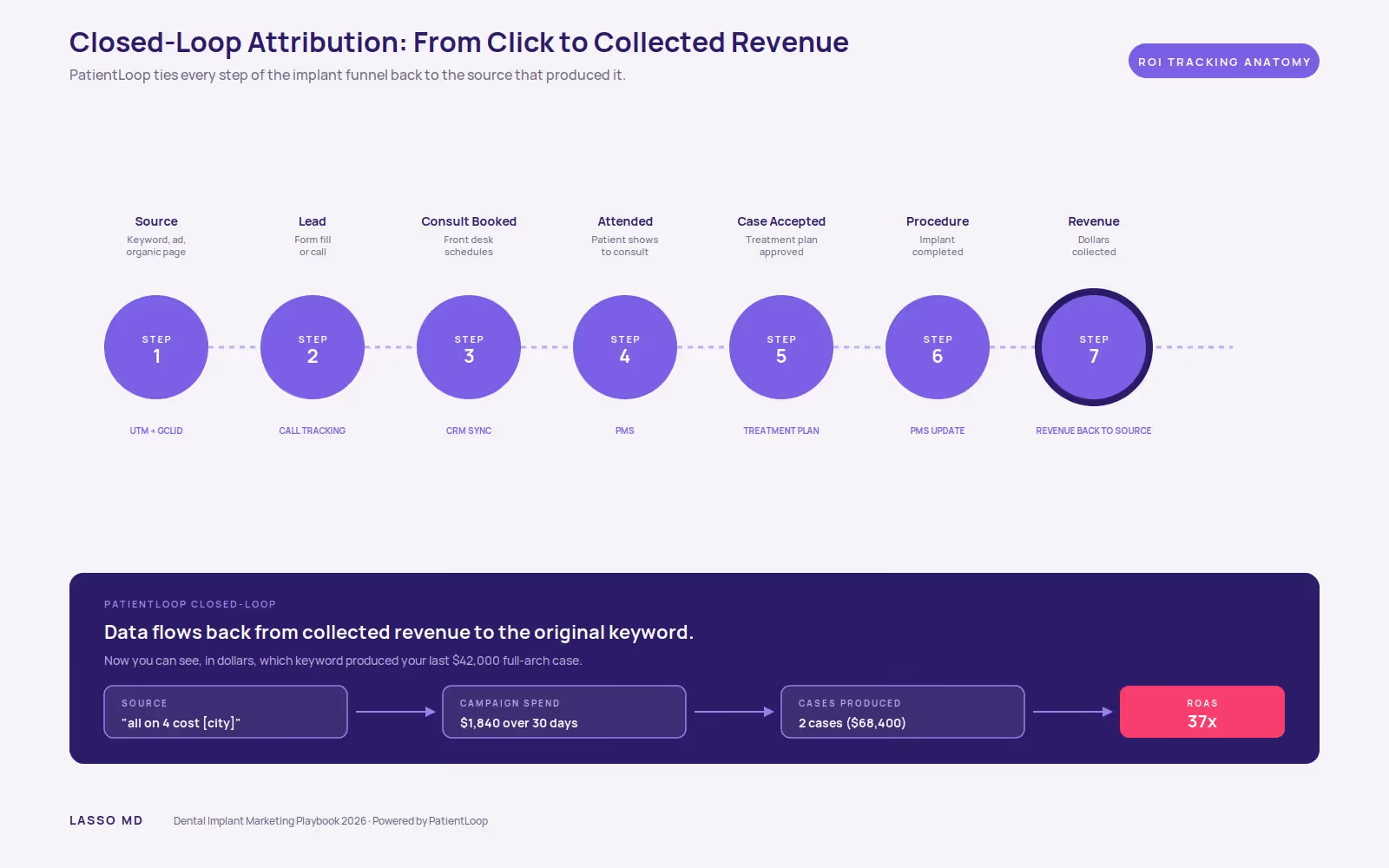
Most implant marketing fails not at the top of the funnel but at the measurement layer. A practice will spend $8,000 a month on Google Ads, see "30 leads" in the dashboard, and have no idea which of those leads turned into consults, which consults became cases, and which cases produced revenue. When the next budget review comes, the conversation defaults to "we should probably try Facebook ads" instead of "we should double down on the keyword that produced our last $42,000 case."
Closed-loop attribution fixes this. The full chain looks like:
- Source (specific keyword, ad, or organic landing page)
- Lead (form fill or call)
- Consultation booked
- Consultation attended
- Case accepted
- Procedure completed
- Revenue collected
Every layer requires its own tracking mechanism. Call tracking with dynamic number insertion captures the lead. CRM and PMS integration captures the booking and attendance. Treatment plan acceptance data captures the case. PMS revenue data captures the dollar amount. Closing the loop means each of those systems talks to the others.
This is exactly what PatientLoopTM Growth Software was built for. Lasso MD's Lead Tracking and ROI Tracking features tie marketing source data all the way through to collected revenue, so a practice can see, in dollars, which keyword produced their last full-arch case.
For practices not yet using a dedicated platform, the minimum viable setup is: a dynamic call tracking tool (CallRail or similar), UTM parameters on every paid and organic link, an integration between your form provider and your PMS, and a monthly reconciliation of leads to procedures. It is more manual, but it works.
For the impact of front-desk call handling on this same funnel, see Unlocking Lead Conversion: How AI Call Grading Transforms Patient Intake.
Common Mistakes That Tank Implant Campaigns
Eight failure modes we see consistently:
- Sending all paid traffic to a generic /services/implants URL.
- Hiding pricing entirely or providing only "Call for pricing."
- Running implant ads in the same campaign as general dentistry.
- Using only "dental implants" as the keyword, missing higher-intent variants like "all on 4 cost," "implants near me," and "denture to implant conversion."
- Not running call recordings or call grading on implant inquiries (front-desk conversion is often the bottleneck, not lead volume).
- Treating reviews as a passive system instead of actively requesting service-specific feedback.
- Optimizing Google Ads for "form fills" rather than "qualified consultations" or "revenue."
- Treating implants like a hygiene campaign in budget, creative, and follow-up cadence.
Conclusion: Win the Funnel, Then Scale
Implant marketing in 2026 is not about doing more. It is about doing the right things in the right order: a segmented funnel built around how patients actually research, a landing page that answers candidacy and cost before the patient has to ask, local SEO that wins the map pack, paid ads that target the right intent without burning budget on irrelevant clicks, content and reviews that pre-sell, and closed-loop attribution that proves which channels produce real cases.
If you are running implant marketing today and cannot say with confidence which channel produced your last $40,000 case, the highest-leverage step you can take is to fix attribution first and tactics second. Lasso MD's PatientLoopTM platform was built for exactly this problem in dental marketing.