%20(1).avif)


The New Dental Patient Discovery Funnel
AI search is already how new patients find their next dentist and unfortunately, the vast majority of dental practices are still optimized for a discovery model that no longer exists—especially those relying only on traditional dental SEO strategies.
Up until recently, nearly all patient acquisition followed a predictable, linear path: search Google, click blue links, visit a website and then contact (call) the office. Today, that journey has been compressed - users receive answers directly from AI-generated summaries without clicking through to a website.
- Up to 69% of all searches now end without a click (1)
- When AI summaries appear, users click links only 8% of the time (1)
- 93% of AI search sessions end without visiting a website (1)
This shift fundamentally changes visibility; removing the need to visit your website entirely.
The question is no longer “Where do you rank?” - it is “Will AI recommend you?”
Traditional SEO vs. AI-Driven Search Visibility
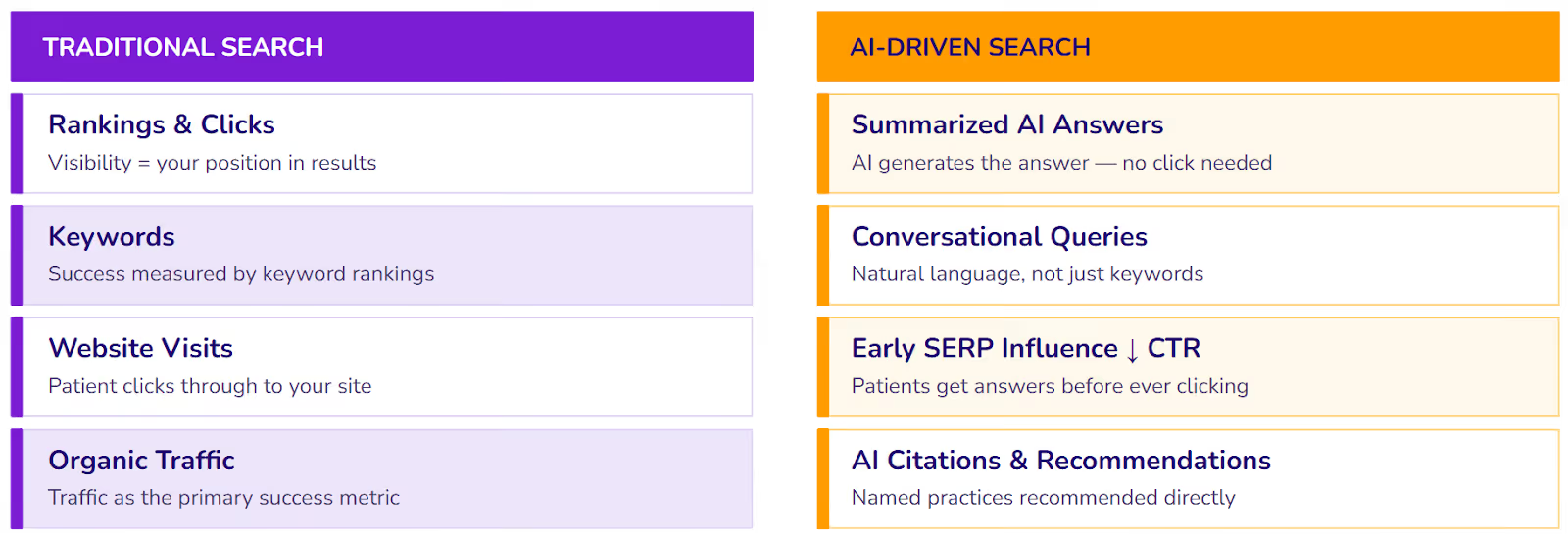
Traditional SEO is built on rankings, keywords, and traffic. Visibility is earned by appearing higher in search results and attracting clicks—often supported by strong dental website design.
AI-driven search operates differently.
It prioritizes:
- Summarized answers instead of clicks
- Conversational, intent-driven queries instead of keywords
- Pre-click influence instead of post-click engagement
- Direct provider recommendations instead of ranked listings
AI systems ingest, interpret, and synthesize content across multiple sources—then present a single, consolidated answer.
As a result, a #1 ranking can be excluded entirely from AI-generated responses.
- The #1 position can lose up to 79% of its clicks when AI summaries appear (1)
- Zero-click behavior now accounts for over one in four searches (1)
This creates a parallel visibility layer where inclusion is earned through clarity, structure, and authority, not just ranking position.
This represents a permanent behavioral shift, not just a temporary disruption.
The AI Platforms Driving Patient Discovery
AI-driven patient discovery is concentrated across four primary platforms:
Google AI Overview
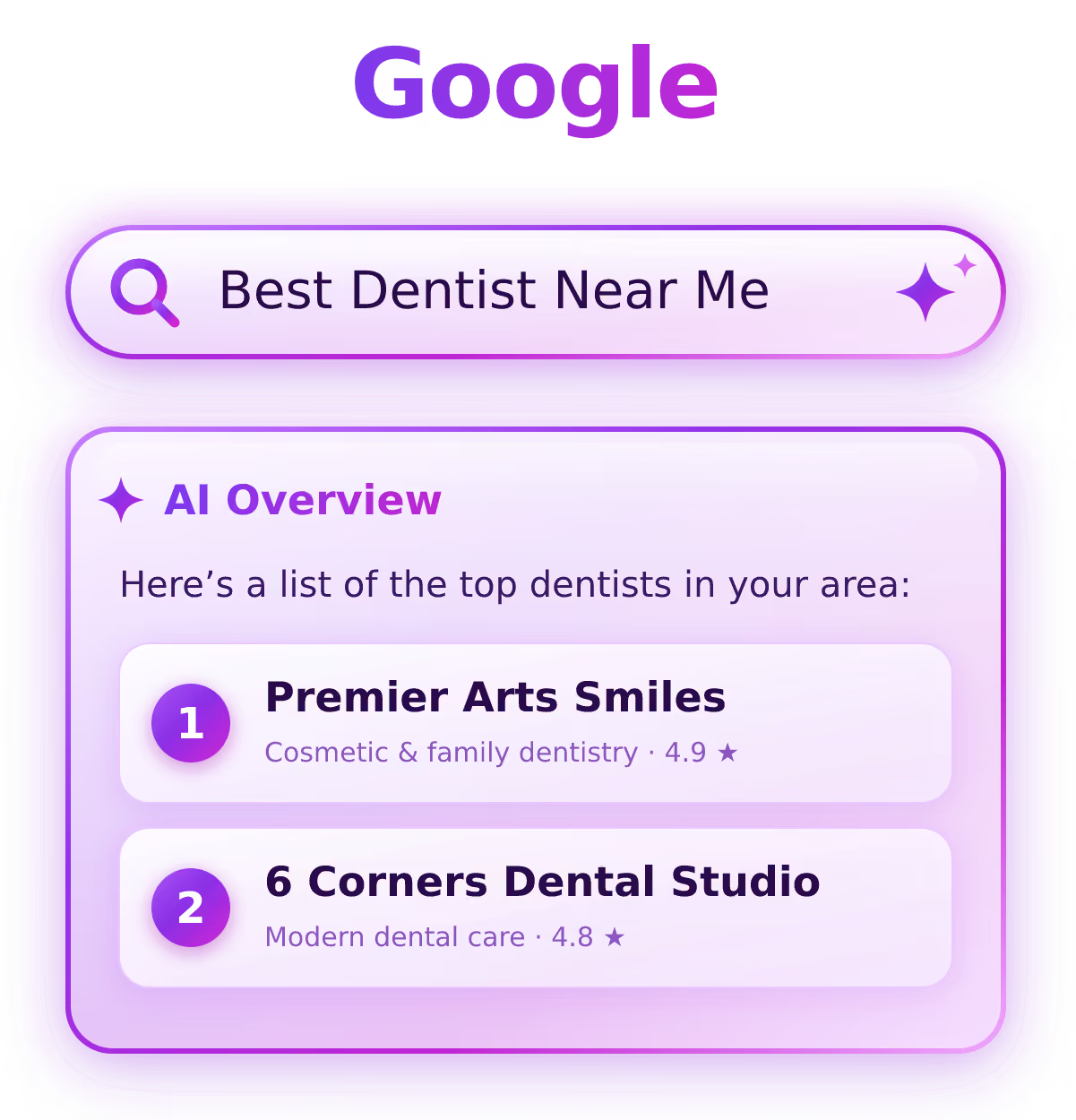
Now reaching over 1.5 billion users monthly, AI Overview appears at the top of search results and summarizes content before users scroll. It is triggered by high-intent queries such as cost, treatment comparisons, and local provider searches (1).
Key considerations:
- Aggregates and synthesizes from multiple sources
- Prioritizes structured, high-quality content
- Recommends providers directly
This is influence before the click — and often instead of it.
Gemini (Google AI Mode)
Google’s advanced AI assistant powering conversational search experiences and deeper, context-aware answers inside Google Search. This is a standalone as well as integrated deep dive tool directly within Google.
- Used intentionally to handle more in-depth, multi-turn research
- Synthesizes broader information beyond top-ranking pages and is heavily influenced by authority, clarity, educational depth, consistency and reviews
- Directly references specific practices, reviews and specialists
- Impacts trust and used by patients to compare providers head-to-head
Gemini helps patients decide on you, not just discover, and plays a critical role in the decision-making phase.
ChatGPT
With 200M+ weekly users, ChatGPT is a conversational LLM search interface that answers queries directly based on web sources, providing summarized guidance instead of just a list of links. It is the world’s most-used AI tool for health questions and provider research, with patients asking natural language questions like “what’s the best dentist for implants near me?”
- Standalone browser & app-based interface providing an iterative question and answer experience
- Used for cost estimates, candidacy questions and clear specialty match
- Influenced by brand authority, review sentiment, content clarity and third-party mentions
- Frequently provides shortlists, comparisons and “best of” recommendations for use as second opinions and provider validation before booking—similar to how patients evaluate practices through customer reviews.
Shortlists and recommendations shape perception before a patient ever visits a website, and validates provider selection as a trusted second opinion after initial website evaluation.
Perplexity AI
Standalone AI search platform that generates summarized, citation-backed answers which heavily influence which practice patients consider credible, similar to a research assistant.
- Prominently displays source citations alongside the AI answer
- Preferred for serious, high-intent, provider research and comparisons
- Pulls heavily from evidence-backed content, including authoritative websites, news sources and review platforms
- Rewards clarity, factual accuracy and well-organized educational content
Perplexity influences patients during the research and validation phase, where citation-backed answers determine which practices make the shortlist.
How AI Shapes Provider Selection
AI platforms now influence every stage of the patient journey, and how they respond to these two queries on the opposite sides of the patient discovery funnel, provides critical insight into your practice’s AI search visibility and what you can do about it.
[USE CASE] Early-Stage Research (Education → Provider Selection)
“Why are my gums bleeding when I floss?”
This is a patient who isn’t ready yet - they’re scared, curious and just starting to research what is going on in an attempt to understand what is happening.
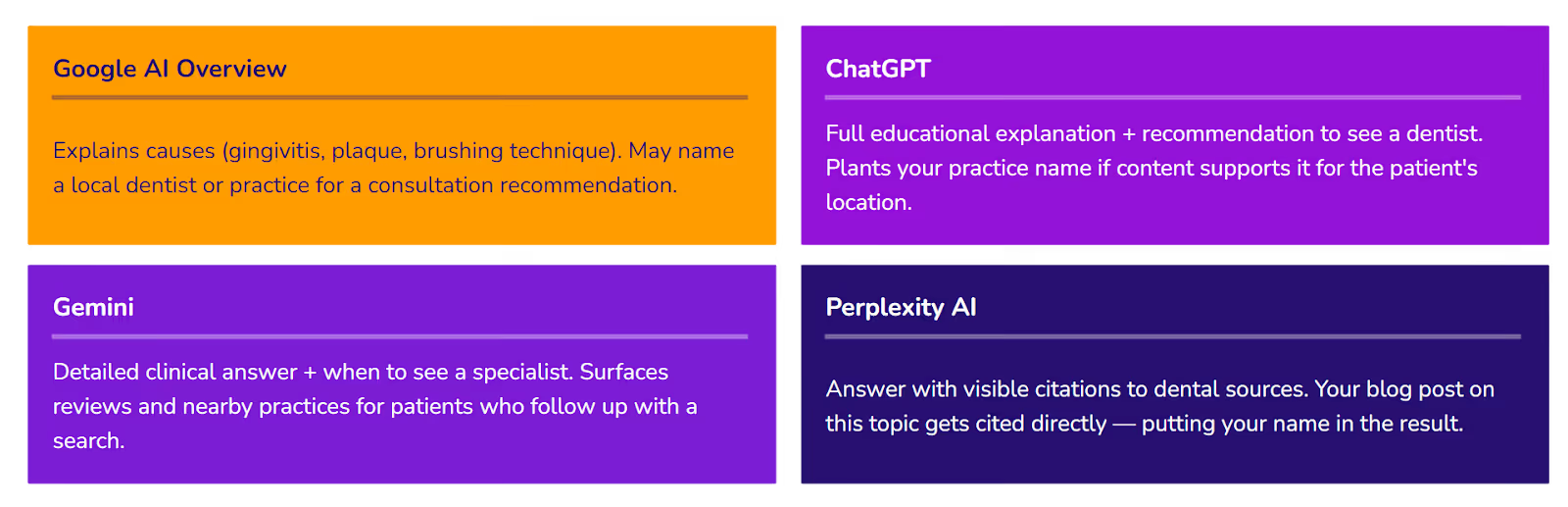
Discovery Impact: Each AI platform answers the clinical question, providing educational answers, and then, if confident, surfaces relevant, local dental practices for consideration. A well-written large-language-optimized (LLMO) blog post about bleeding gums, with clinical context, your doctor’s name, as well as a call-to-action will introduce your practice long before the booking decision.
Educational visibility becomes patient acquisition (provider selection).
[USE CASE] Late Stage High-Intent Treatment Research
“Best dentist for dental implants near me”
This is a patient who already knows they want implants and they’re researching who to call.
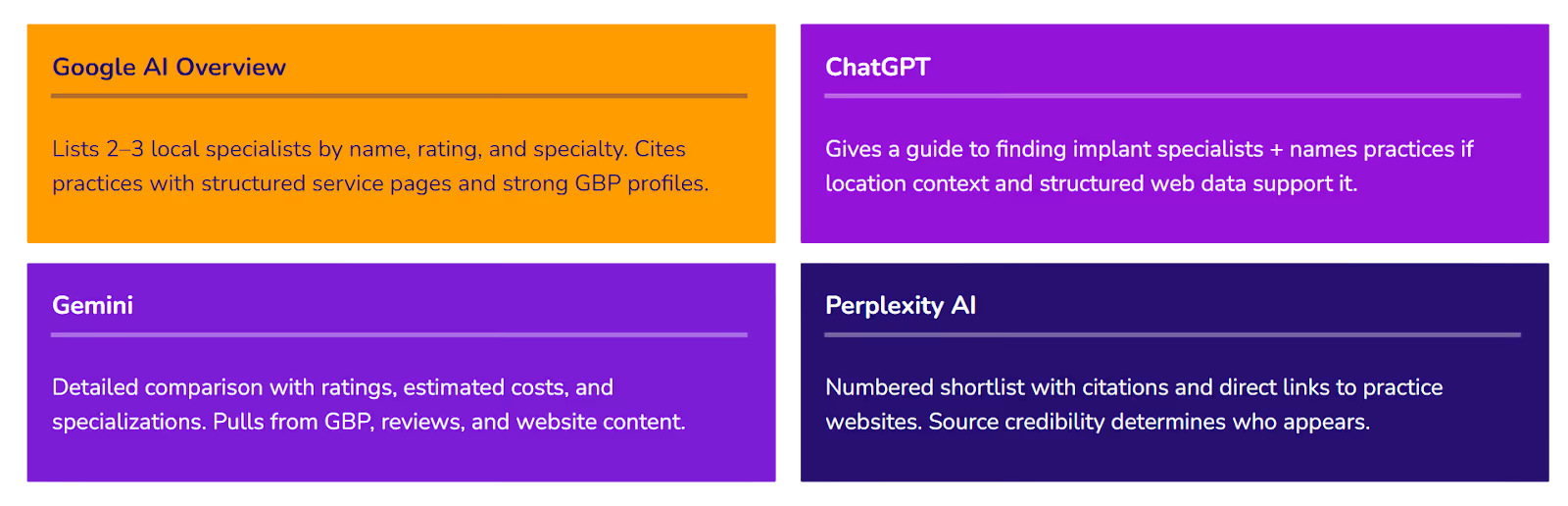
Discovery Impact: AI tools will deliver 2-3 recommended providers, not a list of 10 links and patients will often visit only 1–2 websites before booking. Being cited here actually increases click-through rates by up to 35% vs. non-cited competitors (1) and your GEO efforts will determine whether your practice makes the shortlist.
Being in the AI answer is more valuable than being ranked #1 in traditional search.
The Three-Strategy AI Visibility Framework
1. Generative Engine Optimization (GEO)
Definition
Generative Engine Optimization (GEO) is the process of structuring and labeling website content so AI systems can ingest, interpret and surface it within generated answers.
This is not necessarily writing new content; more importantly, this is about making what you already have legible for AI systems so they can read it, extract it and use it to answer patient questions—something Lasso MD implements through its structured dental marketing systems.
AI does not “rank” your page — it parses and reconstructs it.
Practical Dental GEO Examples
- Location-Specific Authority Sections
Embed geographic signal density that AI parsers can isolate and attach to local intent queries, giving generative systems the contextual anchors needed to associate your practice with a defined service area.
Example: Neighborhoods served, available parking and nearby landmarks - Definition-First Service Pages
Front-load each service page with a self-contained definitional block so generative systems can extract a clean conceptual primer before pivoting into candidacy, technique and outcome detail.
Example: What are dental implants; followed by candidacy information like who are they right for and what types should patients consider - Patient-Focused Answer Blocks
Construct discrete, modular content units around the questions patients actually voice, so AI systems can lift them as self-contained passages rather than discard them inside long-form prose.
Example: Commonly asked questions about restorative dentistry covering both tooth repair and replacement options - Intent-Based Content Clusters
Organize adjacent sub-queries into thematically linked clusters that mirror the natural arc of patient curiosity, allowing generative systems to traverse related questions and surface your content across an entire decision journey.
Example: Dental implant cluster — Are they painful? What's the recovery time? Can I eat normally afterward? - Transparent Pricing Ranges
Publish defensible, range-based cost data with adjacent procedural variables named inline, giving AI systems extractable numerics that satisfy commercial-intent queries competitors typically obscure.
Example: Providing specific, yet realistic dental implant cost ranges, including additional procedural considerations such as bone grafting or sinus lifts - Structured Comparison Sections
Render treatment-versus-treatment evaluations in parallel, attribute-aligned formats that AI systems can deconstruct dimension by dimension when synthesizing comparison-driven responses.
Example: Dental Implants vs Dentures, Clear Aligners vs Metal Braces
Dental GEO Implementation Tactics
AI systems extract and reconstruct content based on structure, clarity, and context. These tactics ensure your content is usable within AI-generated answers:
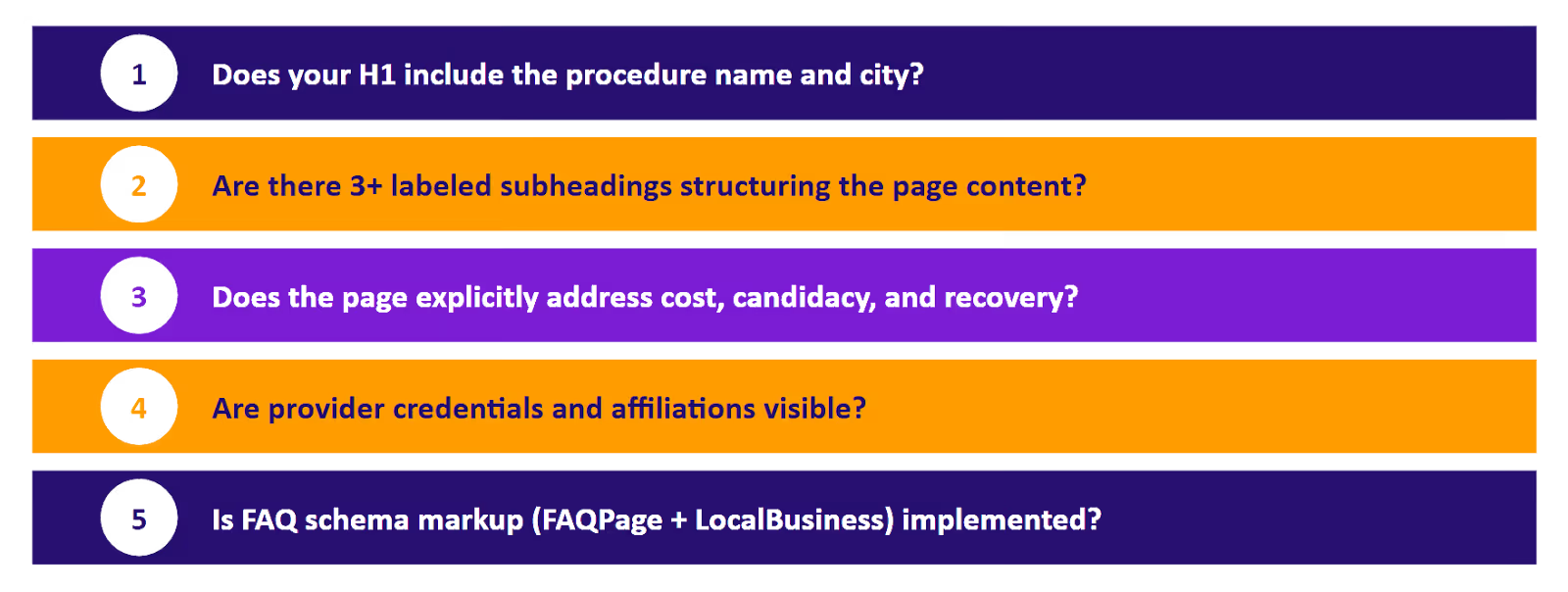
- Use clear heading hierarchy (H1 → H2 → H3)
Organize content so each section represents a distinct, extractable concept - Lead with definition-first content
Start service pages with a direct explanation of the procedure before expanding - Segment content into labeled sections
Clearly separate cost, candidacy, recovery, and comparisons - Embed location context throughout
Reinforce geography using neighborhoods, landmarks, and service areas - Include provider attribution within content
Reference doctor names, credentials, and expertise inline - Implement structured schema markup
Use FAQPage, LocalBusiness, and Service schema for machine readability—often paired with tools like lead tracking software to measure performance. - Write in extractable blocks, not long-form paragraphs
Keep sections clean and self-contained so AI can reuse them directly
GEO Service Page Audit
Key Dental GEO Strategies
- Prioritize top 5 revenue-driving procedure pages for fastest ROI
- Ensure every page explicitly addresses cost, candidacy, and recovery
- Build complete, self-contained service pages (not fragmented content)
- Reinforce local authority signals consistently across all core pages
- Align website content with Google Business Profile and review language
- Standardize page structure to create consistency AI can learn from
- Continuously update and refine pages based on high-intent patient queries (cost, pain, outcomes)
AI systems favor content that is well-structured, context-rich, and easy to deconstruct (2).
2. Answer Engine Optimization (AEO)
Definition
Answer Engine Optimization (AEO) is the practice of creating content that directly answers patient questions in a format AI systems can extract, cite, and deliver verbatim.
This is about creating content that answers patients’ questions so directly and concisely that AI has no choice but to use it to provide the best direct answer to real patient questions, including voice search.
AI does not “interpret” weak answers — it skips them.
Practical Dental AEO Examples
- Frequently Asked Questions (FAQs)
Mirror the literal phrasing of high-frequency patient questions and pair each with a concise, citation-ready response engineered to be quoted verbatim inside People Also Ask panels and AI answer boxes.
Example: FAQ "People Also Ask" sections, insurance accepted - Dedicated "Cost" Pages Build standalone cost pages tuned to the localized commercial query so AI systems retrieve a definitive figure for the single most consequential pre-booking question patients submit.
Example: Dental Implant Cost in [City] - Immediate Answer Emergency Pages
Architect emergency content for time-critical retrieval, surfacing the decisive clinical instruction in the opening sentence so voice assistants and AI overviews can deliver guidance under duress without latency or ambiguity.
Example: What should I do if my tooth is knocked out? - Procedure-Based Questions
Address granular, post-procedure operational queries with timeline-specific responses so AI systems can extract calibrated guidance the moment a patient asks "when can I…"
Example: How soon after dental implant placement can I resume normal eating? - Process-Based Ordered Lists
Document multi-step clinical workflows as discrete, numerically sequenced units so AI systems can lift the full ordered set intact, preserving the procedural cadence patients expect when they ask "what are the steps."
Example: What are the steps of a root canal? - Outcome-Based Questions
Quantify post-treatment expectations with concrete duration ranges and replacement cadences, providing AI engines a numeric answer to durability questions that otherwise default to generic, non-attributed copy.
Example: How long do dental implants last? How often do dentures need replacement?
Dental AEO Implementation Tactics
AI selects answers that follow a predictable structure:
- Use the exact question as your H2 or H3 heading
- Provide a direct, specific answer immediately (the first sentence)
- Add 2–3 supporting sentences with clinical detail
- Include clear practice and provider attribution
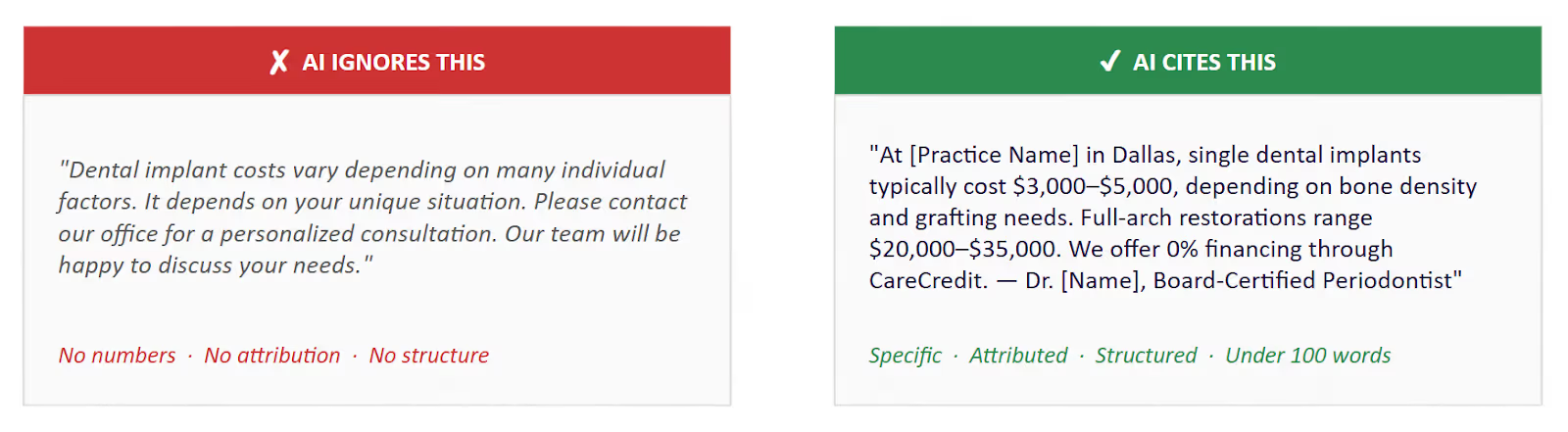
Optimal length: 50–100 words
FAQ Question: How much do dental implants cost in [city]?
Key Dental AEO Strategies
- Build 8–12 FAQs per procedure page
- Focus on high-intent queries (cost, pain, recovery, outcomes)
- Include specific data (pricing ranges, timelines)
- Avoid vague, non-committal language
- Structure answers to be quoted directly by AI systems
When AI systems identify your content as the best answer, they elevate your practice into the response itself.
Example (Process-Based Ordered List): What are the steps of a root canal?
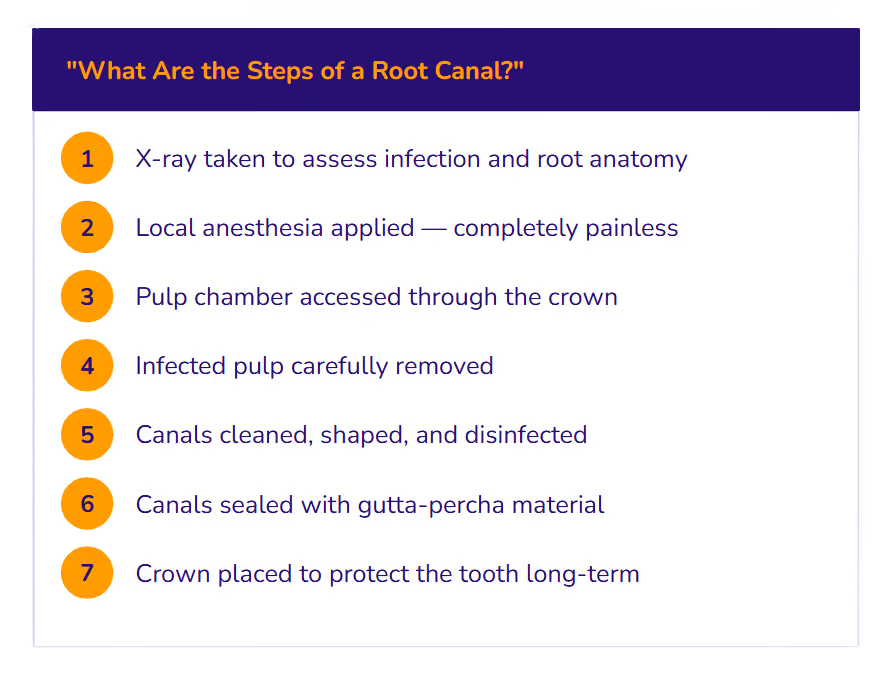
This example represents a perfect AEO content type. If someone asks this question, AI may directly quote your website’s cleanly written seven-step guide as well as name your practice.
3. Large Language Model Optimization (LLMO)
Definition
Large Language Model Optimization (LLMO) is the process of building the authority signals AI systems rely on to determine which practices are credible enough to recommend.
If GEO is about structure and AEO is about answers, LLMO is about trust built from authoritative, clearly structured long-form educational content, such as blogs.
Credibility derived from LLMO efforts has a compounding effect on your AI search visibility.
Practical Dental LLMO Examples
- Local Expertise Pages
Establish topical authority at the intersection of geography and clinical specialty, signaling to language models that your practice is the credible reference point when patients prompt for the "best" provider in a defined market.
Example: Choosing the Best Implant Dentist in [City] - Treatment Comparison Guides
Develop long-form comparative narratives that interpret clinical trade-offs with consultative nuance, training language models to associate your practice with the reasoned analysis patients reward during high-deliberation treatment decisions.
Example: Dental Implants vs Bridges, Invisalign vs Braces - Before & After Case Studies
Document longitudinal patient outcomes with clinical specificity, supplying language models with the proof-of-work artifacts that disproportionately influence which practices they elevate inside recommendation contexts.
Example: Replacing missing teeth with dental implants - Condition-Based Educational Pages
Build comprehensive, condition-anchored educational hubs that map presenting symptoms to underlying pathology, reinforcing the depth and clinical-reasoning signals language models weight when selecting recommendable sources.
Example: Missing teeth, Tooth infection, Jaw Pain / TMJ, Sleep Apnea - "What to Expect" Procedure Guides
Narrate the full procedural arc, pre-op through recovery, so language models read your content as patient-centered and emotionally informed, two attributes that measurably elevate recommendation probability over transactional service copy.
Example: What to expect during dental implant surgery - Symptom Checkers & Myth vs Fact Pages
Counter clinical misinformation with evidence-graded clarifications, positioning your practice as the corrective authority language models reach for when surfacing trustworthy responses to ambiguous or fear-driven patient queries.
Example: Why do my gums bleed? Why do my teeth feel loose? Dental implant myths
Dental LLMO Implementation Tactics
AI systems evaluate authority using consistent signals:
- Proper HTML markup hierarchy (H1 → H2 → H3 structure)
- Named authors with verifiable credentials
- Recent content updates within the past 12 months (freshness matters)
- Depth and completeness of content (1,000+ words)
- Internal linking across related topics
- References to trusted external sources (ex. AAOMS), , often supported by conversion-focused insights from ROI tracking tools.
LLMO Content Credibility Scorecard
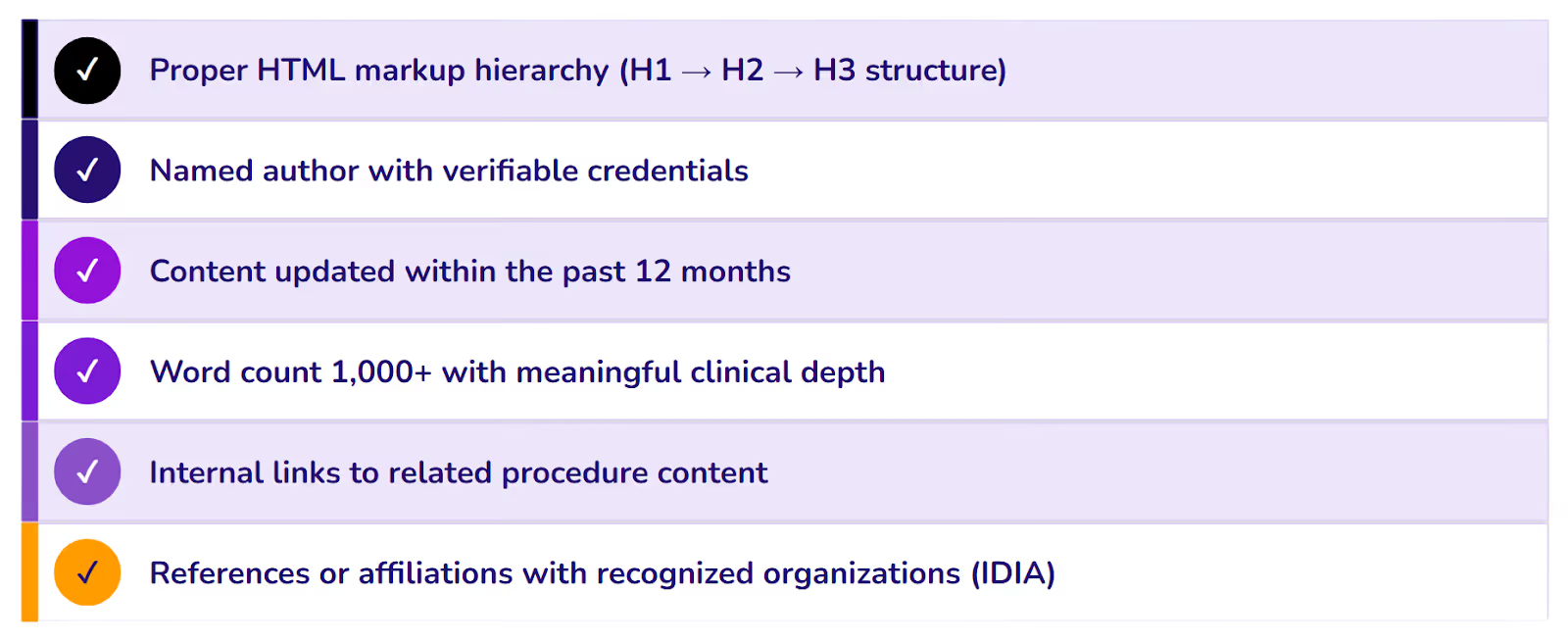
AI search systems show a strong bias toward authoritative, third-party-validated content over purely brand-owned content (2).
Key Dental LLMO Strategies
- Build topic authority, not isolated pages
- Cover the entire patient journey (symptom → solution → outcome)
- Reinforce clinical expertise and local trust signals simultaneously
- Align messaging across website, reviews, and external mentions
Trust is the primary filter through which AI systems decide who gets recommended.
Practical Opportunities to Improve AI Visibility
The opportunity is immediate — and asymmetric.
Practices that adapt early will gain disproportionate visibility as competitors remain optimized for outdated models.
High-impact actions include:
- Optimizing top procedure pages using GEO principles
- Building structured FAQ ecosystems using AEO
- Publishing authoritative long-form content using LLMO
- Introducing transparent pricing and comparison content
- Align all digital signals into a consistent narrative (web, reviews & local presence)
Practices that execute effectively are more likely to:
- Appear in AI-generated summaries
- Be cited as authoritative sources
- Be recommended directly to patients
Conclusion
AI-driven search has redefined patient discovery.
Visibility is no longer about ranking alone — it is about being understood, trusted and recommended by AI systems that now sit between your practice and the patient.
Dental organizations that implement GEO, AEO, and LLMO in a coordinated strategy will not only maintain visibility — but expand it in ways traditional SEO alone cannot achieve.
Sources
- Industry research on AI search behavior, zero-click trends, and CTR impact (Pew Research, Ahrefs, Seer Interactive, SparkToro, SimilarWeb). https://www.techopedia.com/ai-overview-zero-click-searches
- Academic research on Generative Engine Optimization and AI search systems (ArXiv studies on GEO and AI search behavior) https://arxiv.org/abs/2509.08919