%20(1).avif)


Opening a new dental practice is one of the most challenging endeavors you will undertake as a dental professional, and one of the most rewarding. Some decisions are highly subjective, like choosing the right front desk staff or the best practice management software. The major milestones on your marketing timeline are not.
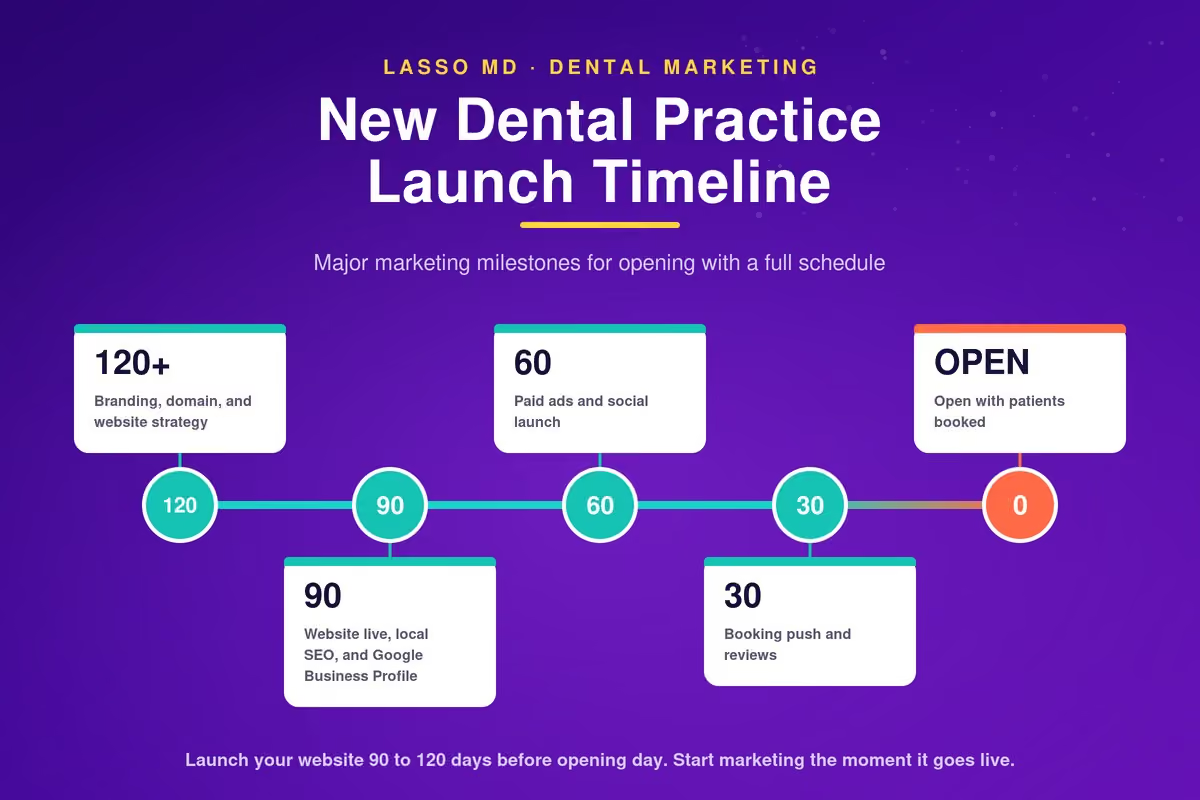
As a rule, launch your website at least 90 to 120 days before opening day, then begin marketing the moment it goes live. Get this sequence right and you attract new patients before opening day instead of chasing them afterward. The reason comes down to how website design, search engine optimization, and paid advertising actually build momentum.
Here is why the timing matters.
Start With Brand Identity, Domain, and Target Market Research
Before your website goes live, register a domain that fits the practice, solidify your brand identity, including your business name and logo design, and choose the target neighborhoods within your market that will supply your patient base. Plan your attribution and tracking now too, including tracking phone numbers, so that every marketing dollar produces the objective data you need to manage channel performance with confidence.
Search Engine Optimization (SEO) for a New Dental Website Takes Time
After launch, search engines need time to crawl and index your site. Crawlers such as Googlebot and AI bots read the instructions in your robots.txt file, then copy and map your content. Submitting an XML sitemap speeds the process and ensures every page lands correctly in Google's index, where your site begins building authority. When a patient searches a phrase like "dentist near me," Google returns its indexed pages ranked by relevance, value, and authority. For a startup dental practice website, expect one to three months before you see measurable traction in local search.
Get Your Google Business Profile Ranking in Local Search
Verifying and optimizing a Google Business Profile can take weeks, especially for a brand new practice at a new physical address. Claiming the profile and proving your identity is only the start. You then need time to optimize it for both function and local ranking: a perfected NAP (name, address, phone number), the primary category set to "Dentist," and accurate practice details such as service descriptions, photos, hours of operation, and online scheduling. For the full GBP playbook, see Lasso MD's Dental Map Pack Local SEO Field Guide.

The pre-opening marketing timeline: website, SEO, GBP, and paid ads work in parallel, not sequence.
Earn Mentions in AI Search
AI visibility, best understood as the mentions and direct citations your practice earns on AI platforms like ChatGPT, Google AI Overviews, Perplexity, and Gemini, rewards the digital signals you establish before launch. These models lean heavily on authority, relevance, and trust built through on-site and off-site content, so your pages should be written for natural, conversational prompts and supported by robust structured data markup that maximizes machine readability. For a deeper treatment, see Lasso MD's guide on mastering AI search visibility for dentists.
Ramp Up Lead Generation Before You Open
Appointment requests, patient waitlists, insurance inquiries, and call volume should build before you open. A strong "coming soon" website, geo-targeted to your priority service neighborhoods and stocked with new patient specials and early-bird booking incentives for your core in-network and fee-for-service patients, is the fastest way to create early momentum. Run the same offers across your social profiles to generate buzz and bring leads in before day one.
Give Google Ads Room to Perform
Paid ads perform far better with a runway. Campaigns learn as they run, and they need optimization time to lower your cost per patient and refine demographic targeting before the pressure of a full schedule sets in. A new Google Ads campaign needs roughly two to four weeks and about 50 conversions to exit the learning phase. SEO and paid ads also compound, working together to command attention and convert more visitors into new patients. For practical campaign structures that work for dental practices, see Lasso MD's top 5 highest-performing PPC campaigns for dentists.
Build Reviews and Local Citations
Start gathering patient reviews the moment you see your first patient, but begin building credibility with local citations right after launch. Create accurate profiles in industry directories like Healthgrades and Zocdoc, launch your practice Facebook page, and ask your referral partner network to link to your new website. For more on how reviews compound into a long-term acquisition channel, see Beyond Reviews: How Reputation Marketing Is Redefining Patient Acquisition.
A Strong Rollout Looks Like This
The practices that open with a full schedule are not lucky. They started their website and digital marketing months before the first patient walked in, and they let SEO, local search, and paid ads build on one another. If you are mapping your own launch, the runway only works in your favor if you start early. Begin the website and marketing groundwork now, and your opening week becomes a continuation of momentum rather than a standing start.