%20(1).avif)


The 7 campaigns that book high-value cases, and how to build each one.
Nobody on Instagram is looking for a dentist. That one fact should change how you build every campaign on the platform.
Google catches people who already decided they need something. Meta does the opposite. You show up between a photo of somebody’s nephew and a recipe reel, and you have about two seconds to make a stranger care about their teeth. Done badly, that produces a folder of $12 leads who never pick up. Done well, it produces aligner starts and full-arch consults at a fraction of what those cases cost on search.
Here are the seven campaigns we see produce actual production for dental practices, in the order we usually build them, with the copy, the targeting, the landing page, and the thing that quietly kills each one.
The rule that governs all seven
Most practices spend their Meta energy on audience settings. It is the wrong place to spend it.
NCSolutions has run sales-lift analysis across hundreds of campaigns, and their breakdown of what actually drives incremental sales puts creative at 49%. Targeting comes in at 11% (NCSolutions, Five Keys to Advertising Effectiveness). The ad is doing four and a half times the work of who you point it at.
That is even more true in dentistry than in the categories that study covers, because your market is a zip code. There are only so many adults within 15 minutes of your building, and you are going to reach most of them eventually no matter how you slice the audience. What decides whether they book is what they see.
So the practical rule is this: the ad is the targeting. A photo of a 52-year-old man laughing with his wife, over a headline about replacing a full arch, sorts your audience better than any interest checkbox ever did. A price sorts it. A monthly payment sorts it. A specific consult date sorts it. Broad audience, sharp creative, every time.
Three things follow from that, and they show up in every campaign below:
- Real faces beat stock. Your own patients beat models. Your own doctor beats both.
- Put a number in the ad. Price, monthly payment, timeline, or a date. Vague ads get cheap clicks from people who will never book.
- Describe the treatment and the result, not the person reading it. “See what a full arch looks like before you commit to anything” pulls better than a headline that tells someone what is wrong with their mouth, and it keeps you out of the review queue.
1. The Full Smile Makeover
Highest ceiling, longest fuse. A veneer case or full-mouth reconstruction runs $15,000 to $60,000, and nobody books one off a single ad.
Understand what the ad is actually for. It is not selling the case. The case gets sold in your consult room, by you, with a plan on a screen. The ad’s only job is to produce a consult with someone who already likes the idea and already trusts the person they are about to meet. That is why the doctor belongs in the creative and the treatment does not.
Ad copy that works
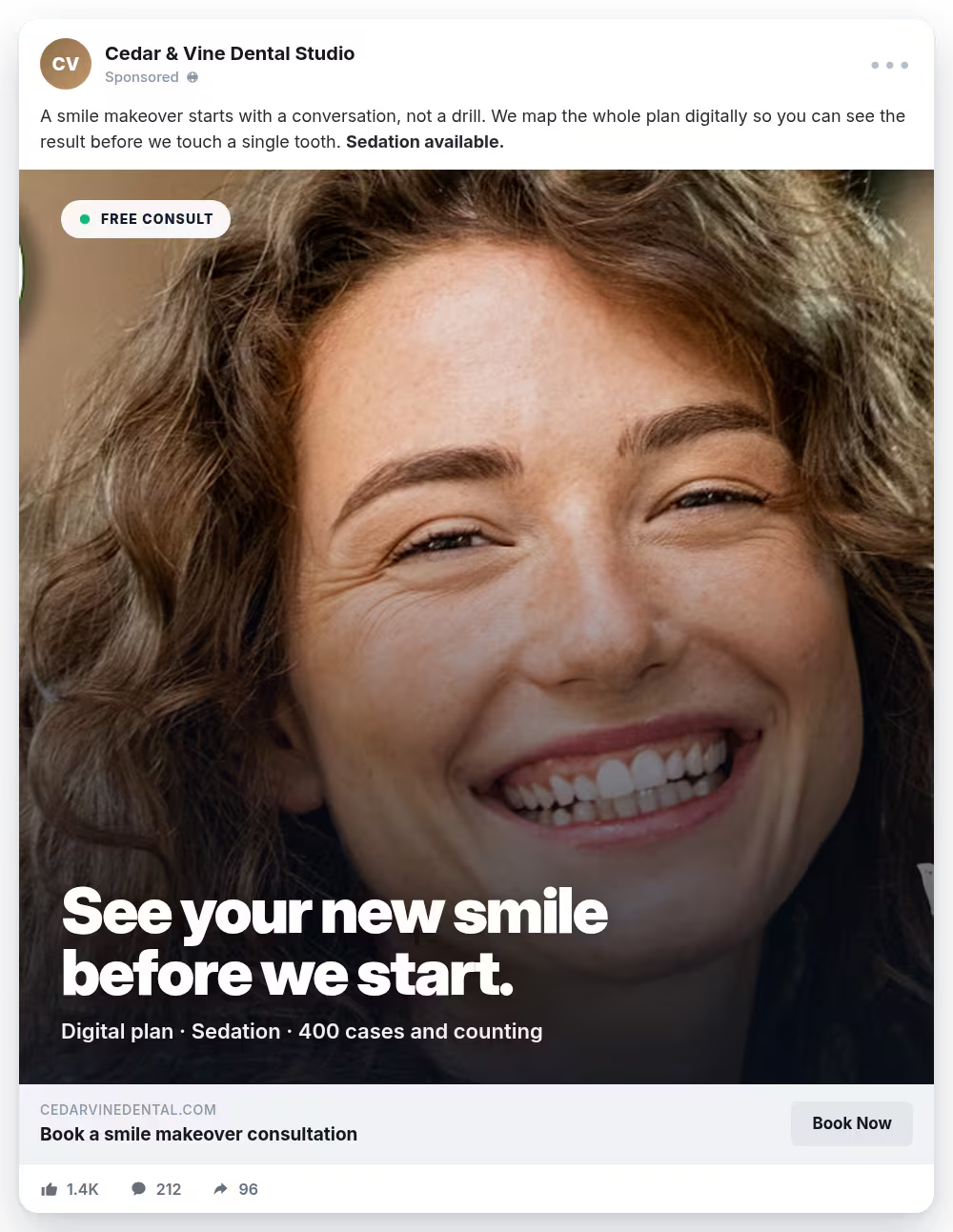
- “A smile makeover starts with a conversation, not a drill. Come see the plan first.”
- “We’ll show you your new smile digitally before we touch a single tooth.”
- “Twelve years, 400 smile makeovers, one dentist doing all of them. Meet Dr. [Name].”
- “Sedation available. Most of our patients say the worst part was the parking.”
Creative
Kill the stock photos. The best makeover creative we run is the doctor talking to a phone camera in the operatory for 20 seconds. It looks native, it survives the fatigue that flattens polished creative in three weeks, and it introduces the person the patient is really buying.
For static, use a face. One person, one real smile, one clear promise. That is the whole ad.
Be careful with before-and-afters. They convert, and they are also the most common reason a dental account ends up in review. A patient talking about how they felt afterward outperforms a tight crop of a mouth mid-treatment anyway.
Landing page
Not your contact form. The doctor’s face above the fold, a real case gallery, the words “sedation” and “financing” visible without scrolling, and one action. Put a price range on the page. Practices that hide the number get more form fills and fewer consults that show up.
Pro tip: Run this at a 20 to 30 mile radius, not 10. People will drive an hour for a smile makeover and about four minutes for a cleaning. Set the radius by the value of the case.
2. Invisalign and Clear Aligners
If you run one campaign, run this one. Aligners are the best fit in dentistry for the platform: visual, cosmetically motivated, socially triggered, and financeable at a number that reads as reasonable inside an ad.
The mechanic that matters is the monthly payment, and there is real research behind why. John Gourville’s work on temporal reframing, published in the Journal of Consumer Research, showed that presenting a cost as a small ongoing amount rather than one aggregate figure changes what people compare it to. An aggregate price gets measured against other big purchases. A small recurring amount gets measured against ordinary small spending, and compliance goes up (Gourville, “Pennies-a-Day,” JCR 24(4), 1998).
“$4,900 for Invisalign” and “$129 a month for Invisalign” are the same case. The second one produces several times the leads, because the first one gets compared to a used car and the second one gets compared to a phone bill.
The catch is in the same research: the reframe only works while the small number still feels small. Push the monthly figure high enough that it lands next to a car payment instead of a streaming subscription and you lose the effect entirely, so lead with your longest term, not your shortest.
Ad copy that works
- “Straighten smarter. Clear aligners that fit your lifestyle, from $129 a month.”
- “Free 3D scan. See your finished smile in about 15 minutes, then decide.”
- “Most of our aligner patients finish in 6 to 9 months. Some are done before summer.”
- “Wedding in the spring? Aligners take about 8 months. Let’s do the math.”
Creative
Two formats carry this campaign. In-office footage: the scan happening, the tray coming out of the case, the assistant walking someone through tray one. It answers “what is this actually like,” which is the real question. And patient testimonial video, which beats everything if you can get it. Ask at the debond appointment, not by email three weeks later.
Landing page
Aligners are the one campaign where a well-built instant form genuinely competes with a landing page, because the offer is simple and the decision is emotional. Test both. If you use a landing page it needs a scan offer or a simulator, the monthly payment, and a calendar. If you use an instant form, four questions maximum, and text the lead inside five minutes.
Pro tip: Age 25 to 54 is the productive band. Split your creative, not your audience. The ad that works on a 31-year-old planning a wedding and the ad that works on a 46-year-old who quit wearing his retainer are different ads, and Meta will find both of them if you put both in one ad set.

3. Dental Implants and All-on-X
Meta is better at implants than most practices expect and worse at it than they hope. Lead volume is easy. Qualified lead volume is the entire problem.
Single-tooth and full-arch behave like different products and deserve different campaigns. A single implant is a $4,000 to $6,000 decision people make in a few weeks. A full arch is a $25,000 to $50,000 decision that takes months and usually involves a spouse.
For full arch, stop generating leads and start generating consults with a date on them. A seminar, a consult week, a free CT scan appointment. The constraint is what creates movement, and it also filters out everyone who was just curious.
Ad copy that works
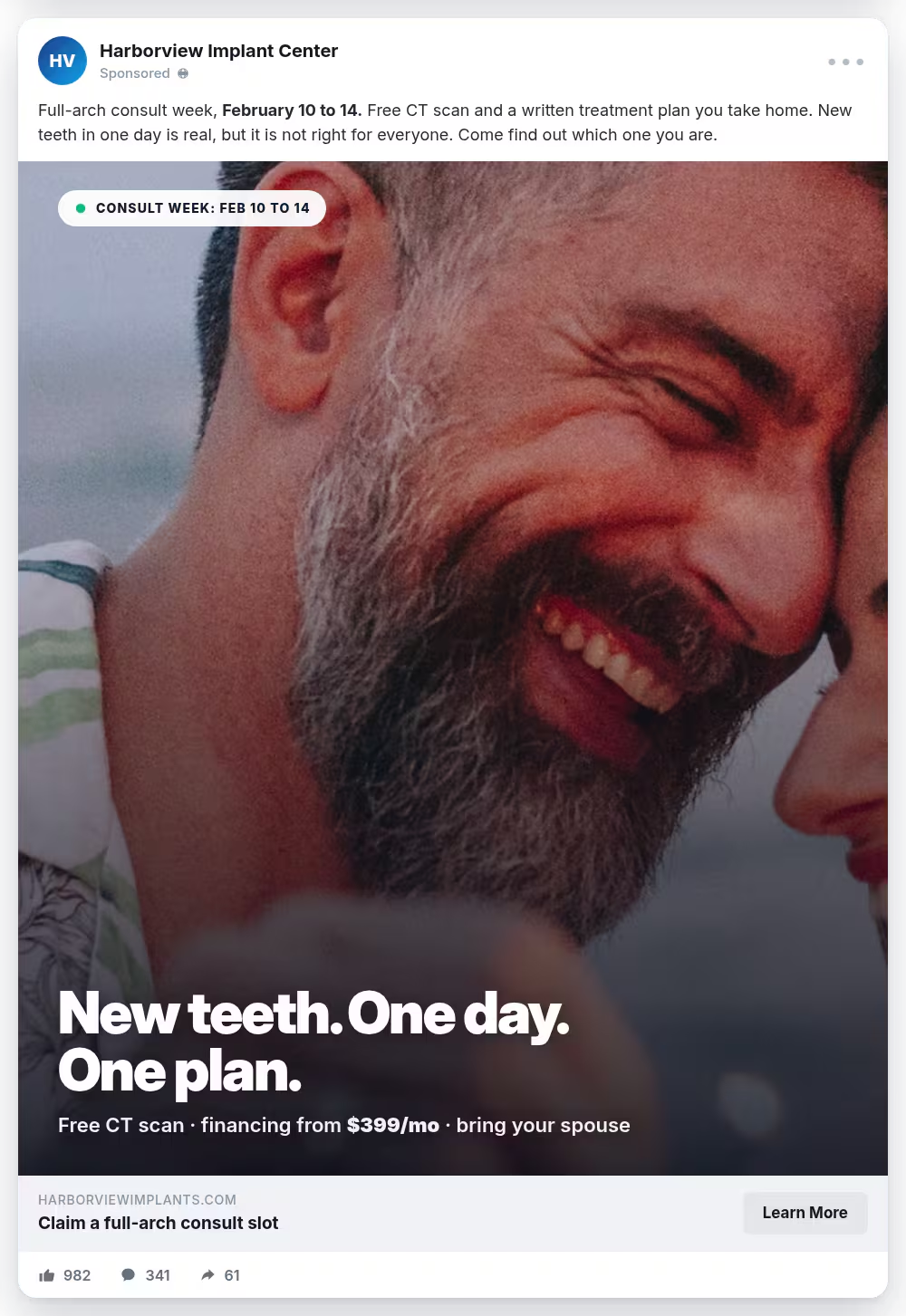
- “Full-arch consult week, February 10 to 14. Free CT scan and a written treatment plan you take home.”
- “New teeth in one day is real, but it isn’t right for everyone. Come find out which one you are.”
- “Financing from $399 a month. We’ll tell you what you actually qualify for before you leave.”
- “Bring your spouse. Most of our full-arch patients decide together.”
Creative
Patient story video, and let it run long. Sixty to ninety seconds of someone explaining what life was like before and what changed. Keep the surgical footage mild. This is one of the few places on Meta where longer video beats shorter.
For static, use a face in the right age range doing something ordinary and happy. Nobody in this audience wants to see teeth. They want to see a life that looks like theirs, working.
Landing page
Long, and that is fine. Full-arch prospects read. Technology, credentials, sedation options, a financing calculator, and three patient stories with names and faces. Phone number in the header and clickable, because a real share of this audience will call instead of filling in anything.
Pro tip: Set the radius by drive time, not miles. Forty-five minutes is about right for full arch, which in a rural market can mean 60 miles. Then age-gate at 45 and up. Your lead volume will roughly halve and your consult rate will more than make up for it.
4. Membership Plans
The most underused campaign in dentistry, and the one we would push a general practice to run second.
Set aside the policy conversation. From a marketing standpoint, a membership plan is simply the cleanest offer you can put on Meta. One number. No verification, no eligibility check, no “we’ll look into your benefits and call you back.” A person can read the ad, understand the price, and enroll on their phone in two minutes. Almost nothing else in dentistry can be bought that fast.
What it does for the practice is the interesting part. It converts the patient who was going to wait. It gives your hygiene schedule a predictable base. And it turns a one-time acquisition into a renewing relationship, which is the only thing that makes your cost per new patient look reasonable in year two.
Ad copy that works
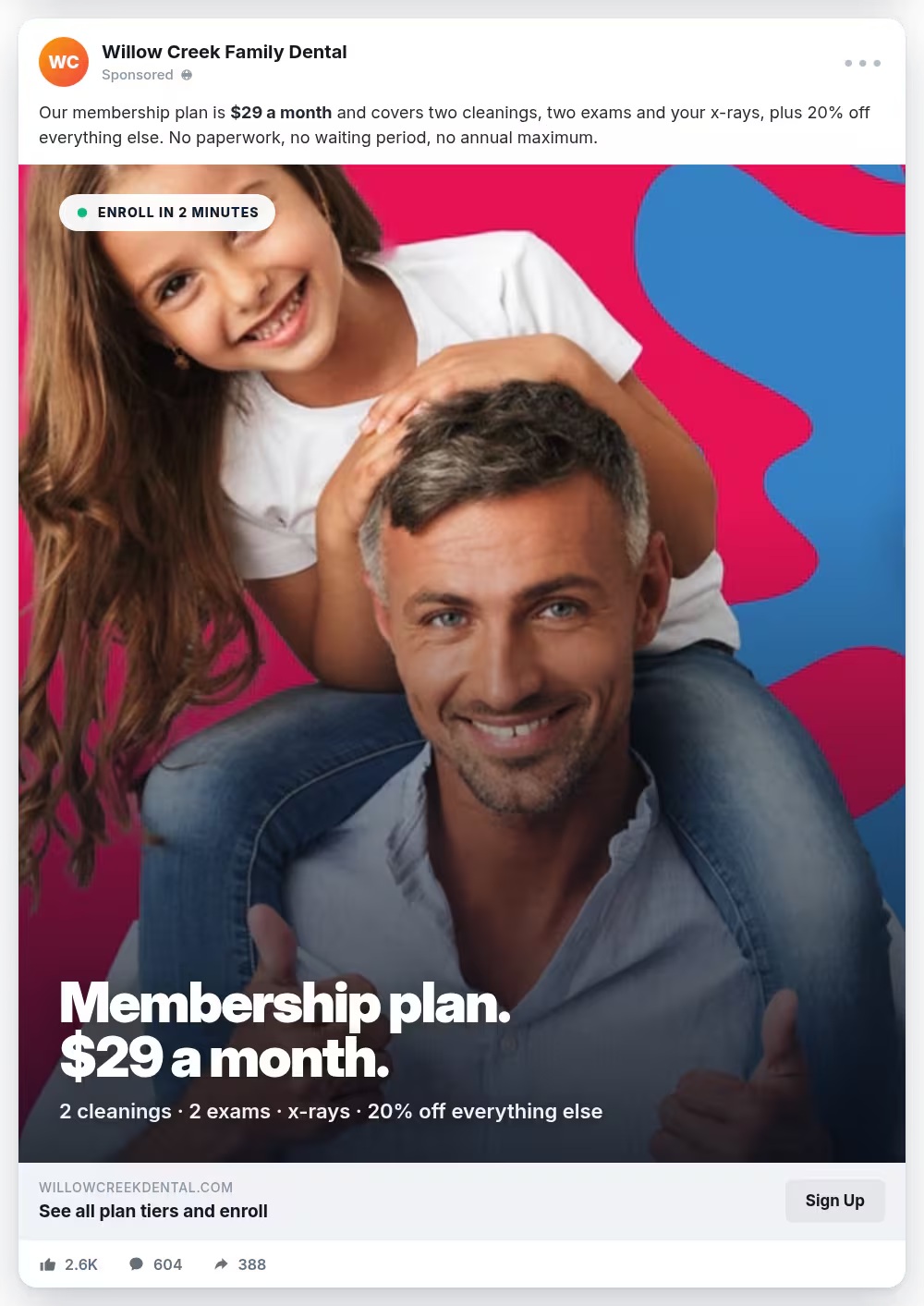
- “Two cleanings, two exams, x-rays, and 20% off everything else. $29 a month.”
- “Our membership plan is $349 a year. Here’s exactly what’s in it.”
- “Self-employed? So are about half our members.”
- “No paperwork, no waiting period, no annual maximum. Enroll in two minutes.”
Creative
Put the price in the image, large. Membership creative should look closer to a menu than to a mood board. Brand color, plan name, the number, what is included. Subtlety costs money in this campaign.
Pair the number with a face, though. A plan graphic with nobody in it converts worse than the same graphic with a family in it, and the audience for this offer is usually a parent doing math.
Landing page
One page, one table, one button. Every tier side by side with what is included, the monthly and annual price, and online enrollment with a card. Every step between the ad and the enrollment costs you about a third of the traffic.
Pro tip: Retarget your own unscheduled treatment list with this offer. A patient who walked away from a $1,900 crown is exactly the person who says yes to $29 a month, and that plan is how the crown eventually gets done.
5. The New Patient Offer
Everyone runs a version of this and most run it badly. The problem is rarely the offer. It is who the offer is pointed at.
A new patient special aimed at everyone within 10 miles competes with every other practice’s new patient special and attracts the least loyal patient in the market. The version that works is aimed at a moment: somebody just moved, somebody’s kid just turned three, somebody’s employer just changed carriers in January.
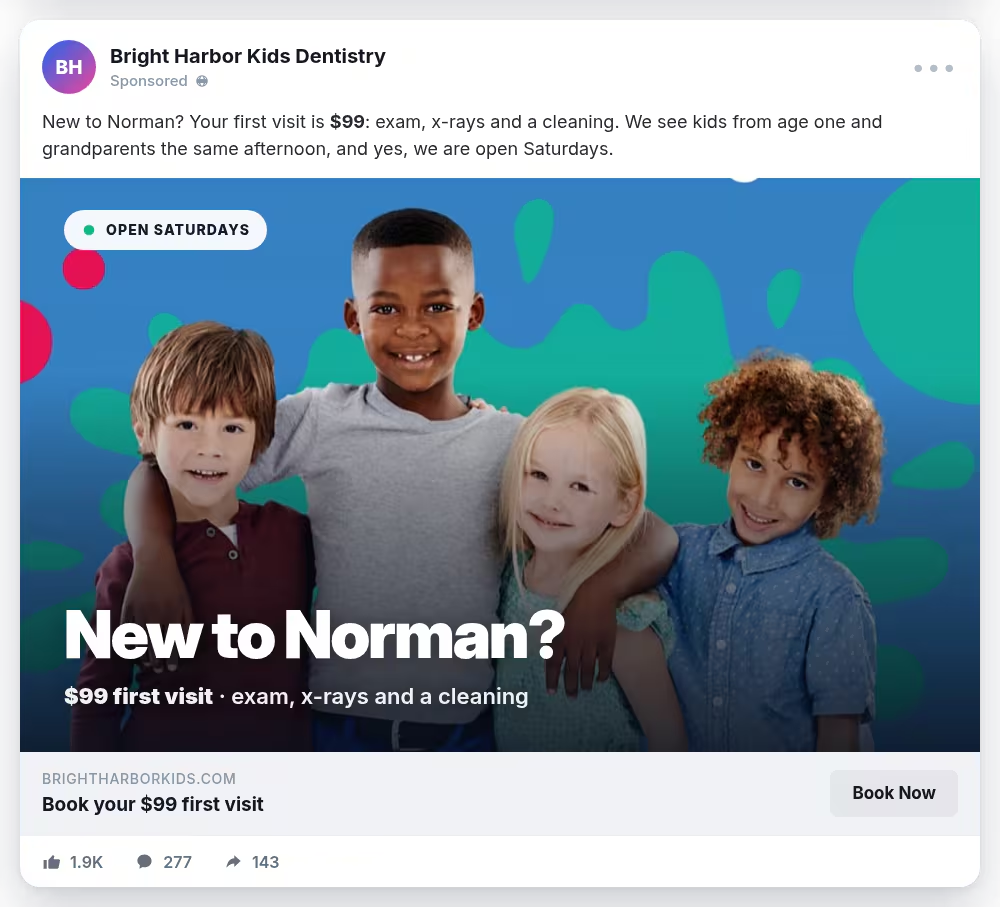
You cannot target those moments with any precision, so you name them in the copy and let people self-identify. “New to Norman?” does more filtering than any audience setting available to you.
Ad copy that works
- “New to Norman? Your first visit is $99: exam, x-rays and a cleaning.”
- “Looking for a dentist who takes the whole family? We see kids from age one and grandparents the same afternoon.”
- “Open Saturdays. We know that’s why you’re reading this.”
- “Same-day and after-hours appointments, because nobody schedules a broken tooth.”
Creative
For family and pediatric practices this is the one campaign where bright, playful, high-contrast design beats clinical polish. Parents scrolling at nine at night respond to warmth. Show actual kids in the actual office, or a family that looks like your patients.
And show the building or the front desk somewhere. Local recognition is a real conversion lever, and stock photography throws it away.
Landing page
Insurance logos, hours including any evening or weekend availability, a map, and online scheduling. If you have same-day availability say it above the fold. If you don’t, don’t imply it.
Pro tip: Run a separate push in January and again in September. Benefits reset in January and school schedules reset in September. Both create genuine appointment-seeking behavior you can lean on without manufacturing urgency.
6. Whitening and Seasonal Offers
This campaign will not build your practice. It will fill a slow week, give hygiene something to do, and quietly build the audience your expensive campaigns retarget later. Judge it on those terms and it earns its budget.
Whitening is the cheapest yes in dentistry. Cosmetic, fast, obvious occasion attached, and priced where nobody consults a spouse. That makes it the best entry point you have for a patient who will later need a crown, a night guard, or aligners.
Ad copy that works
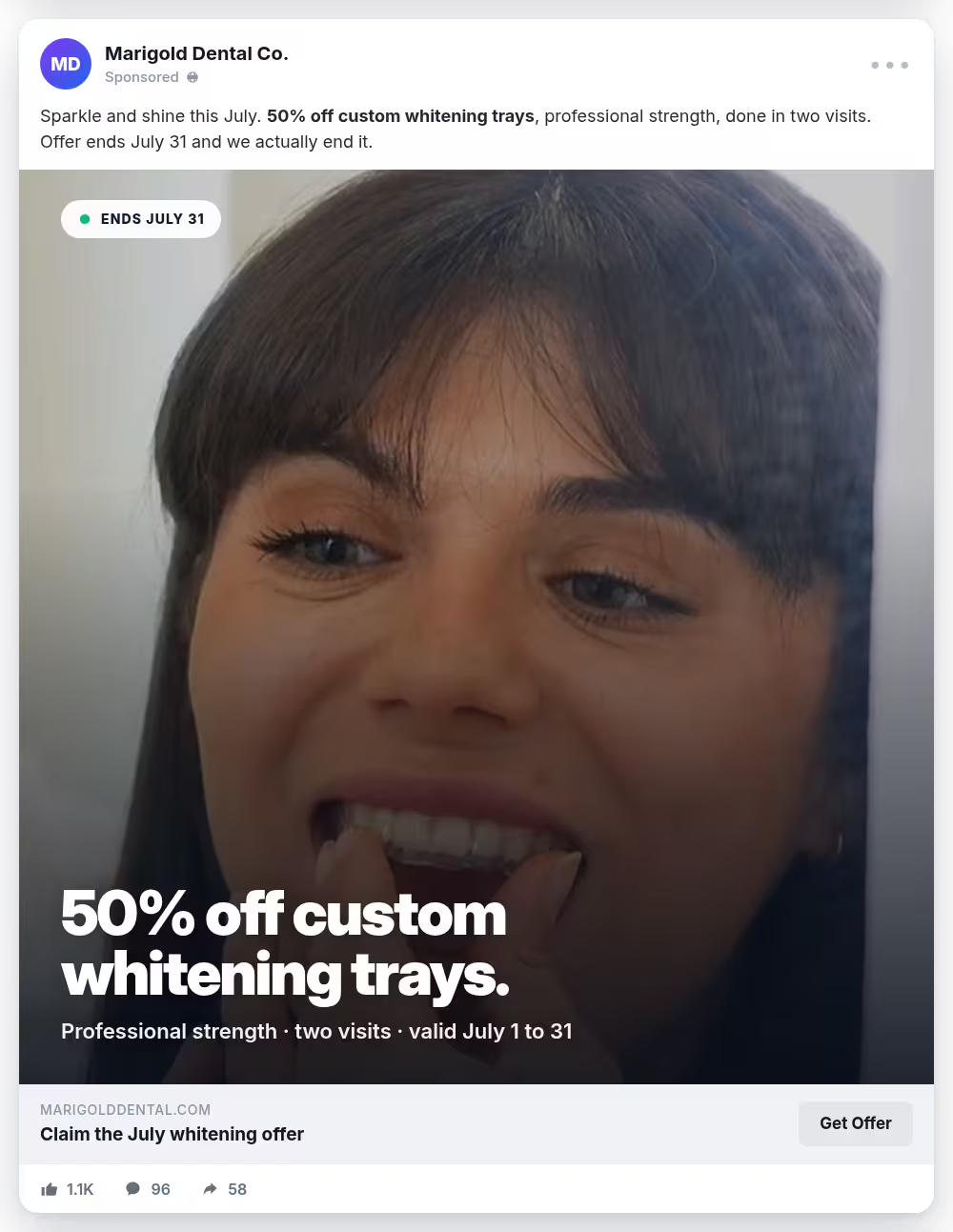
- “Sparkle and shine this July. 50% off custom whitening trays, through the 31st.”
- “Wedding season. Custom trays, professional strength, done in two visits.”
- “Class reunion in six weeks? That’s enough time.”
- “Whitening that doesn’t wreck your enamel. There’s a difference and we’ll explain it in five minutes.”
Creative
Real occasion, real deadline, real number, and a real smile. Put the end date in the image and actually end it, because a permanent sale teaches your market to wait.
Landing page
Skip it. This is the campaign where an instant form or a click-to-message ad usually wins, because the offer is small enough that friction matters more than information.
Pro tip: Cap this at 10 to 15% of your Meta spend and treat the real output as audience, not revenue. Everyone who watched half the video or clicked through becomes the retargeting pool for campaign seven.
7. Retargeting and Patient Reactivation
Best return in the account, smallest budget, almost always the last thing anybody sets up.
Three audiences do the work.
Your patient list. Upload it. Match rates for dental lists run 40 to 70%, and these people already trust you. Use it for unscheduled treatment, membership, and aligner offers. Then use it as the seed for a 1% lookalike, which is the most reliable prospecting audience you can build.
Site and video engagers. Anyone who hit your implants page or watched half a makeover video in the last 90 days. They were considering it and got distracted. A second ad with a different angle, usually financing or a specific date, converts them at a fraction of cold cost.
Dead leads. The form fills nobody reached. A practice with six months of Meta leads is sitting on hundreds of people who raised a hand and never heard back after day two. Reaching them again costs almost nothing.
Ad copy that works
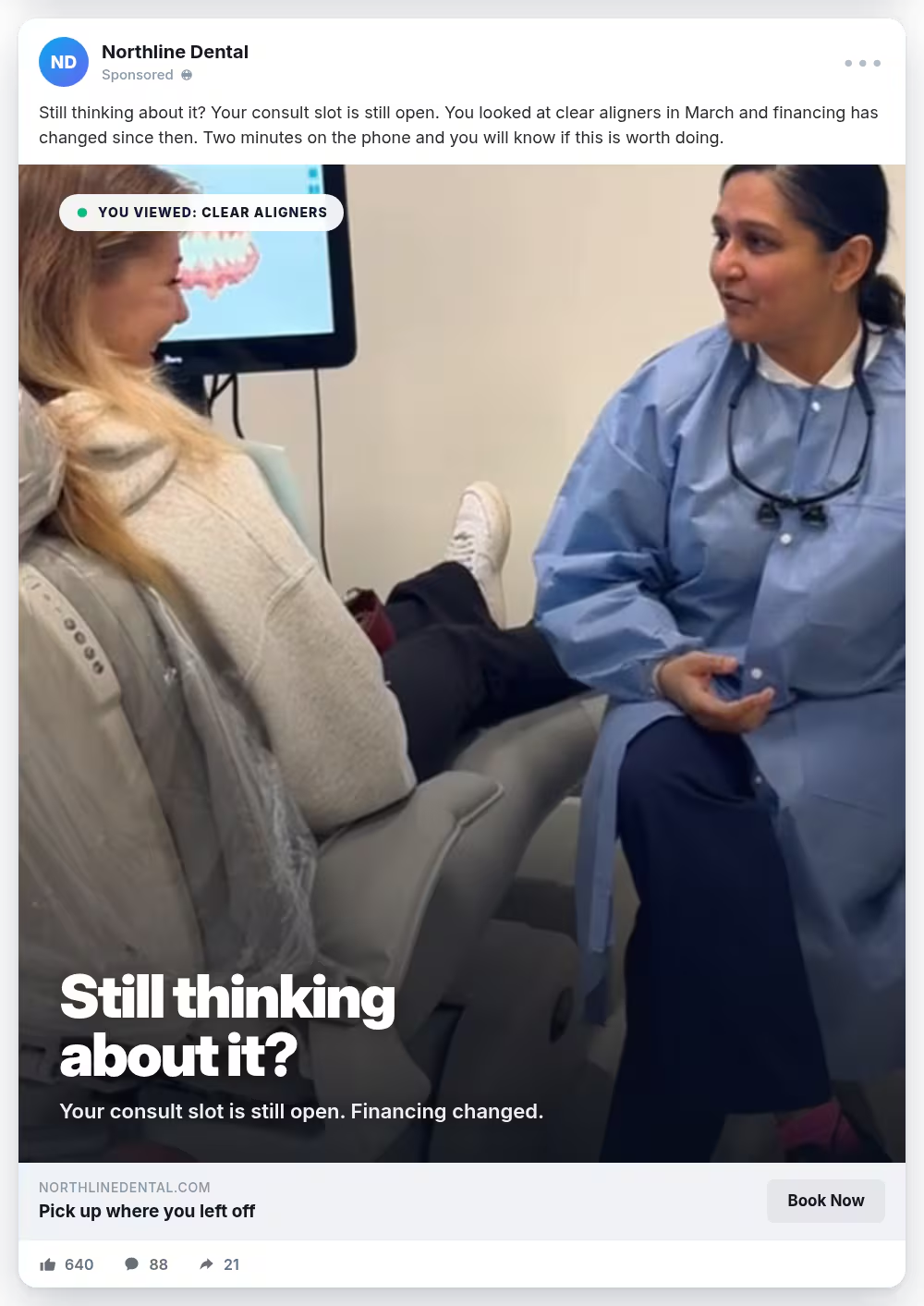
- “Still thinking about it? Your consult slot is still open.”
- “You looked at implants in March. Financing has changed since then.”
- “We never got to talk. Two minutes on the phone and you’ll know if this is worth doing.”
Pro tip: Exclude converted patients from every prospecting campaign. Practices routinely spend 15 to 20% of their budget advertising a new patient special to their own patients, and you will only catch it if you go looking.
Making these campaigns perform
Structure
One campaign per service, one ad set, four to six creatives. Resist building ten ad sets to test audiences. In a local market of 80,000 to 250,000 people, splitting that audience five ways guarantees no ad set ever gets enough data to optimize. Broad, with an age and radius floor, and let the creative segment.
Objective is Leads. Not Traffic, not Engagement, not Reach. Traffic campaigns in dental generate clicks from people who click things.
Budget
$1,500 to $2,500 a month per campaign is the honest floor for a single service in a mid-size market. Below roughly $40 a day, Meta cannot get through the learning phase on a lead event that costs $60 to $120, and you end up paying for an education you never get to use. Two campaigns funded properly beat five funded badly, always.
Creative fatigue is the real constraint
This is what separates Meta from Google day to day. Your search campaigns can run a year untouched. Your Meta campaigns cannot, because your audience is small and frequency climbs fast. Expect performance to decay noticeably in three to five weeks.
Plan for it. Three or four new creatives a month per active campaign is the maintenance cost of running Meta ads for a dental practice. Most agency relationships fail here, not in the targeting.
Speed to lead is not a soft skill
The largest audit of this that exists tracked 1.25 million leads across 2,241 companies for Harvard Business Review. Firms that responded within an hour were about seven times more likely to have a meaningful qualifying conversation than firms that responded an hour later. The more useful number in the same study is the one nobody quotes: 23% of companies never responded to their leads at all (Oldroyd, McElheran and Elkington, HBR, March 2011).
That second figure is the one to check yourself against, because almost every practice believes it calls every lead and almost none of them actually do. Pull last month’s leads and mark the ones that got a real attempt. The gap is usually the cheapest fix in your entire marketing budget.
A Meta lead is colder than a Google lead and decays faster, so text first, call second, and run a follow-up sequence of at least eight touches over two weeks. If your front desk cannot commit to that, lean on landing pages with online scheduling instead of instant forms, and let the patient book themselves.
Landing pages
One page per campaign, matching the ad’s promise word for word, offer repeated above the fold, one action, and a load time under two seconds on a phone. Sending every campaign to the same page is the most expensive shortcut in dental marketing. Meta traffic is close to entirely mobile.
You cannot optimize what you cannot see
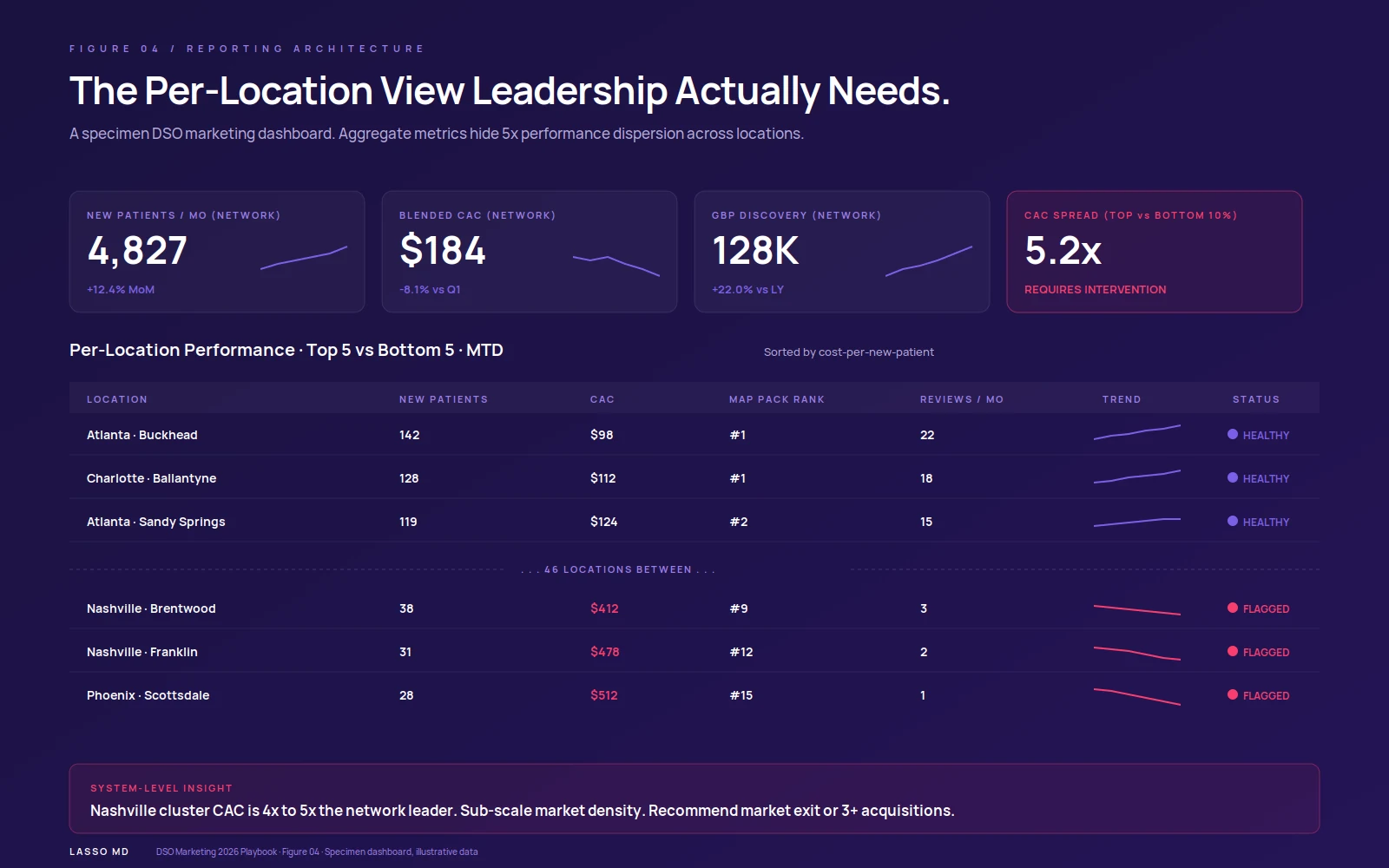
Ads Manager will tell you a story that flatters itself. Attribution windows, view-through conversions and modeled results all lean the same direction, and a lead recorded in the platform is not a patient in your chair. The numbers that decide whether a campaign is worth running happen after the click: who answered, who showed up, what they accepted, what it was worth.
That gap is where most dental ad budgets quietly go. A campaign at $52 a lead with a 9% show rate looks better in Ads Manager than a campaign at $140 a lead with a 60% show rate, and it is worth a fraction as much.
Closing that loop is the point of a platform like PatientLoop. Tie every lead to its source, follow it through to the appointment and the treatment plan, and you start seeing cost per booked consult and revenue per campaign instead of cost per form fill. From there the work stops being guesswork: move budget toward the campaigns producing production, cut the creative that produces leads who never show, and do it again next month.
Continuous is the operative word. The practices that win on Meta are not the ones with the cleverest ad. They are the ones looking at real numbers every week and changing something.
Get a plan for your market
Every number in this article moves depending on your zip code, your capacity, and what the practice down the road is already running. If you want to know which of these seven fits your practice and what it should cost, we’ll build you the plan.
Sources
- NCSolutions, “Five Keys to Advertising Effectiveness,” 2023. Creative accounts for 49% of incremental sales driven by advertising; targeting accounts for 11%.
- Gourville JT. “Pennies-a-Day: The Effect of Temporal Reframing on Transaction Evaluation.” Journal of Consumer Research, 1998;24(4):395-408.
- Oldroyd JB, McElheran K, Elkington D. “The Short Life of Online Sales Leads.” Harvard Business Review, March 2011.
.avif)