%20(1).avif)
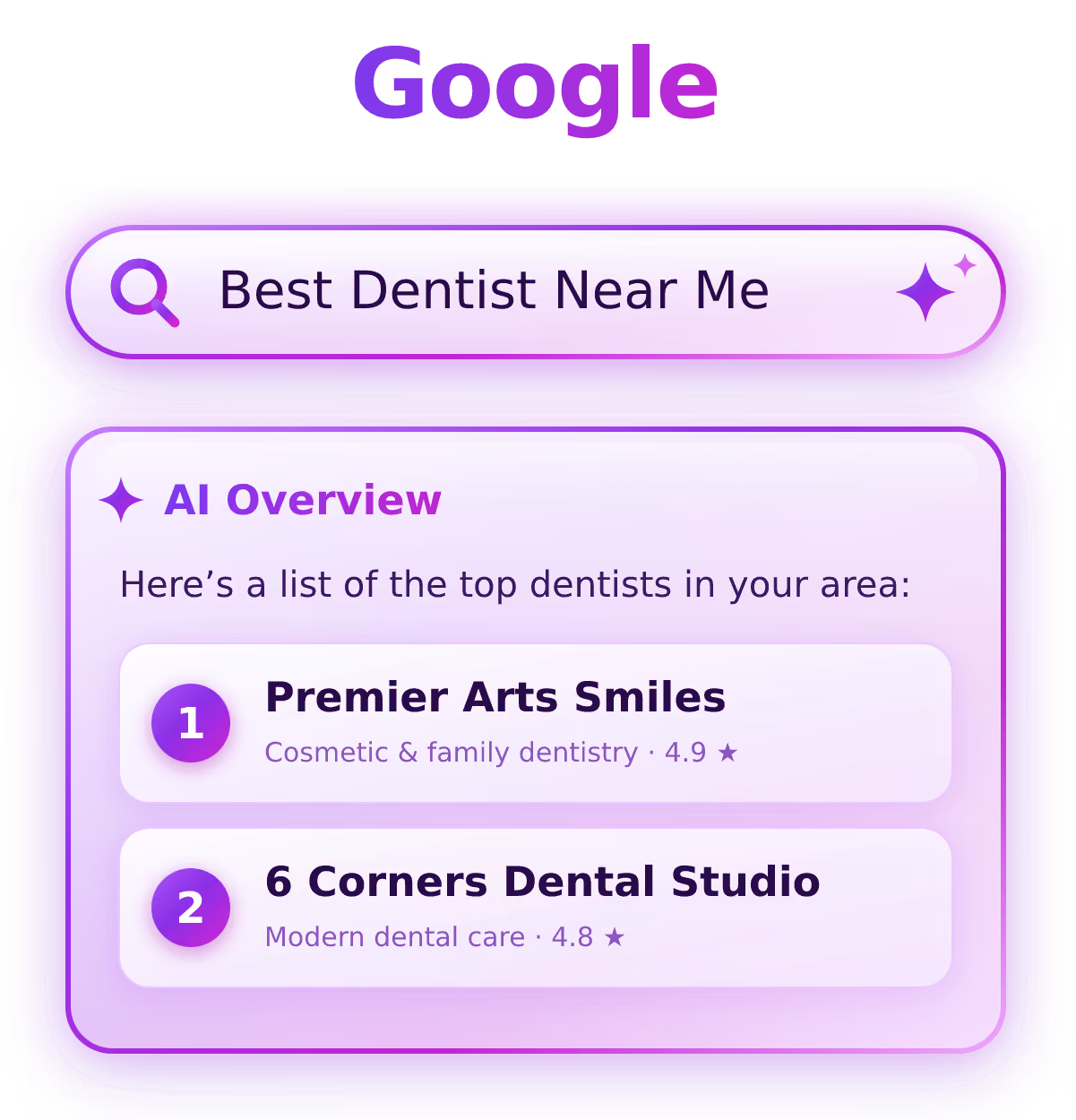


Across the practices we audit, roughly nine in ten are missing the schema markup that tells Google and AI engines what they actually do. When a patient asks ChatGPT or Google's AI for a dentist recommendation, those practices are effectively invisible, not because their care is poor, but because a search engine cannot confidently parse who they are and what they offer.
Schema markup is one of the highest-leverage, lowest-visibility fixes in dental marketing. It is also one of the few that improves traditional rankings and AI recommendability at the same time, and most of your competitors have not done it. Here is what it is, why it now matters more than it did two years ago, and exactly how to fix it.
What schema markup actually is
Schema markup is structured data: a standardized vocabulary, maintained at schema.org, that you add to your website's code to label your information for machines. Instead of a search engine guessing that a string of digits on your page is a phone number, schema states it explicitly: this is the practice name, this is the address, these are the services, these are the hours, this is the aggregate rating.
Humans read a webpage visually. Search engines and AI models read the code behind it. Schema is how you make sure both are getting the same, unambiguous story about your practice. It is added as a block of JSON-LD, usually in the page's head, and it is invisible to visitors, it exists purely to be read by machines.
Why it suddenly matters more: AI search
Traditional Google search could often infer meaning from context even without schema. AI-driven search is far less forgiving. When ChatGPT, Perplexity, or Google's AI Overviews assemble an answer to "who is a good implant dentist near me," they lean heavily on structured, machine-readable signals to decide which practices they can confidently name.
If your competitor has clean, complete schema and you do not, the AI engine has a clearer, more trustworthy picture of them. It recommends the practice it can parse. I wrote about which practices actually get surfaced by AI engines, and the patterns behind it, in the 2026 Dental AI Search Visibility Report, and it is one of the clearest examples of structured data translating directly into visibility. There is also a technical wrinkle worth knowing: many AI crawlers do not execute JavaScript, so schema that is injected client-side by a plugin or widget is invisible to them. Your structured data needs to be server-rendered, present in the raw HTML, to count.
The schema types that matter for dental practices
You do not need every schema type in existence. A few carry most of the weight.
1. LocalBusiness or Dentist schema. This is the foundation: your name, address, phone, hours, geographic area served, and accepted payment types. The Dentist type is a subtype of MedicalBusiness and LocalBusiness, and it is the anchor entity for your whole practice. A minimal version looks like this:
{
  "@context": "https://schema.org",
  "@type": "Dentist",
  "name": "Bright Smile Dental",
  "address": {
    "@type": "PostalAddress",
    "streetAddress": "123 Main St",
    "addressLocality": "Austin",
    "addressRegion": "TX",
    "postalCode": "78701"
  },
  "telephone": "+1-512-555-0100",
  "url": "https://brightsmile.com",
  "openingHours": "Mo-Fr 08:00-17:00",
  "areaServed": "Austin, TX"
}
2. Service schema. One entry per procedure you want to be found for, so an engine understands you do implants, orthodontics, or airway treatment specifically, not just "dentistry" in the abstract. This is what connects your practice entity to the high-value queries in Signal 2 of a findability audit.
3. FAQPage schema. Question-and-answer content marked up so it is eligible for rich results and, more importantly now, easily quoted by AI answers. This is often the single fastest schema win, because good practices already have FAQ content on the page, it just is not marked up.
4. Review and AggregateRating schema. Your review signals in a form engines can read directly, so your star rating and review count can surface in results.
This is the same structured-data thinking behind our broader approach to AI search visibility for dentists, and it complements, rather than replaces, strong dental SEO fundamentals.
The mistakes that quietly break schema
Adding schema is easy. Adding schema that actually works is where practices trip up. The four most common failures we see:
Client-side injection. As above, schema added by a widget that runs in the browser is missed by AI crawlers and sometimes by Google's own renderer. Server-rendered JSON-LD in the page source is the standard to hold your site to.
Schema that contradicts the visible page. If your markup claims hours or an address that do not match what a visitor sees, Google can ignore all of it. The structured data must describe what is actually on the page.
Copy-pasted boilerplate. One generic LocalBusiness block sitewide, never customized per location or per service, tells engines almost nothing specific. Multi-location groups get hit hardest by this.
Orphaned entities. Your practice, your services, your author bylines, and your reviews should reference one another as a connected graph, not float as disconnected islands. A BlogPosting with a real author Person that links out via sameAs is worth far more than a nameless byline.
How to check what you have in two minutes
You can test any page with Google's Rich Results Test or the Schema Markup Validator. Paste your homepage and a service page URL and see what structured data is detected. Then view the raw page source (right-click, View Source) and search for "application/ld+json" to confirm the schema is actually in the served HTML and not injected later by script. If the validator is sparse, or the source has nothing, you have found a fast, meaningful win.
The reason I built dentalist.ai was to understand exactly how AI engines decide which practices to recommend, and structured data sits at the center of that decision. Schema is not a technical nicety anymore. It is increasingly the difference between being recommended and being invisible.
The takeaway
Schema markup will not fix a weak practice or a broken booking flow. But for the nine in ten practices missing it or doing it wrong, adding clean, complete, server-rendered structured data is one of the rare fixes that lifts both traditional rankings and AI recommendability at once. It is quiet, it is technical, and it is exactly the kind of advantage most competitors will not bother to claim.

.avif)